
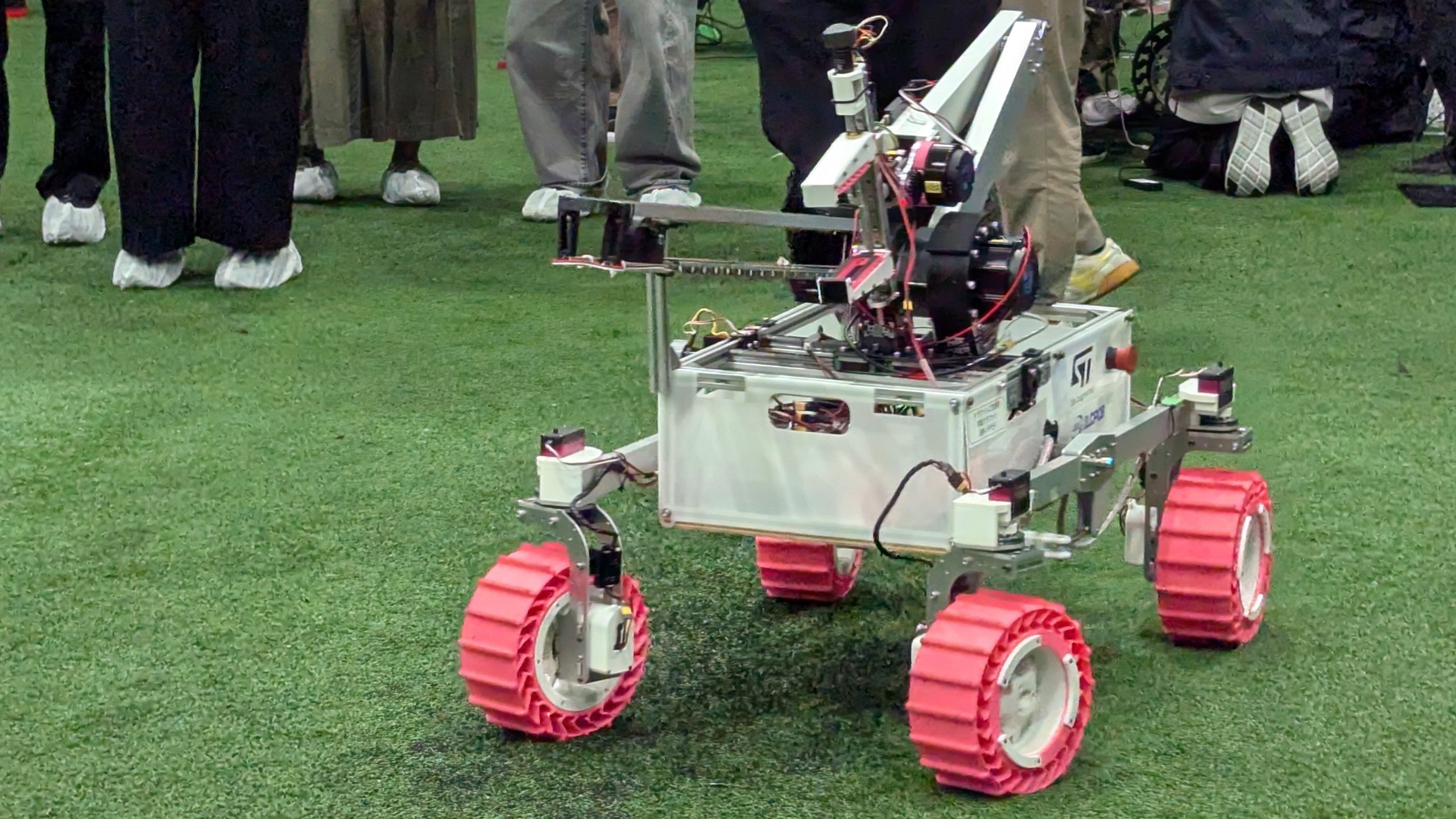
Rover 02
TR-2
Our second rover, in development with University Rover Challenge 2027 in mind. Winner of the Space Rover Cup 2026.
Concept
Real competition experience,
carried into the next rover.
TR-2 is TSUKUBA ROVER TEAM's second rover. Building on what we learned operating our first rover TR-1 at the Tottori Rover Challenge 2026, we are developing it with University Rover Challenge (URC) 2027, the world's leading student rover competition, in mind.
At the Space Rover Cup 2026 in October 2026, it competed in all three missions (darts, unmanned construction and sample retrieval) and won.
Features
TR-2 features
01
Servo motors
160kgf
The drive uses high-torque 160 kgf servo motors.
02
An arm that moves in parallel
Improved arm
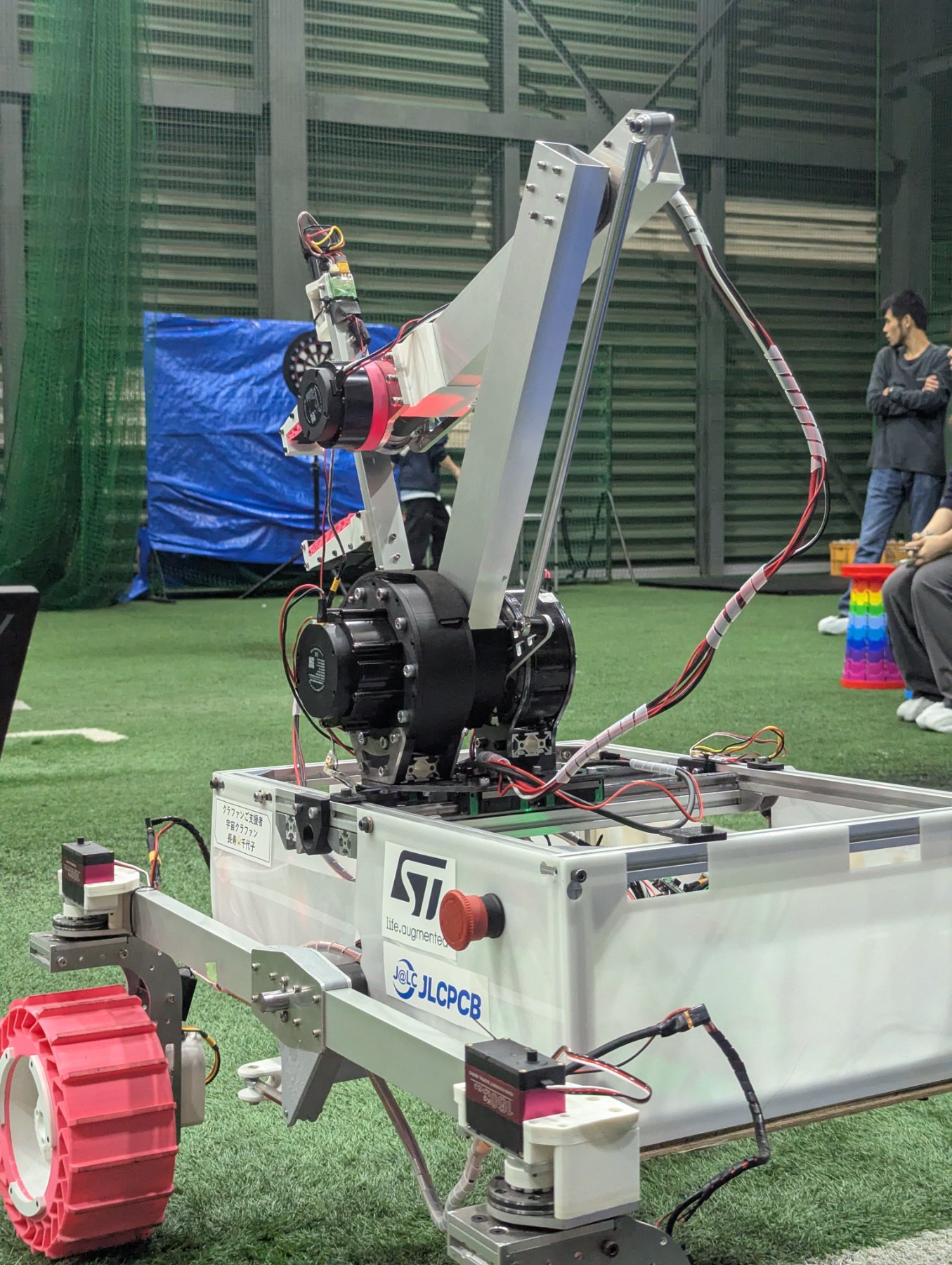
We strengthened the joint torque and added a linear mechanism so the arm can move in parallel.
03
In-house cycloidal reducer
Reduction ratio 1:9
The arm joints use cycloidal reducers designed and built by our team.
04
Microcontroller
STMicroelectronics
Control uses a microcontroller from STMicroelectronics.
Specifications
Key specifications
Size (stowed)
684 mm (W) × 1010 mm (D) × 900 mm (H)
Drive
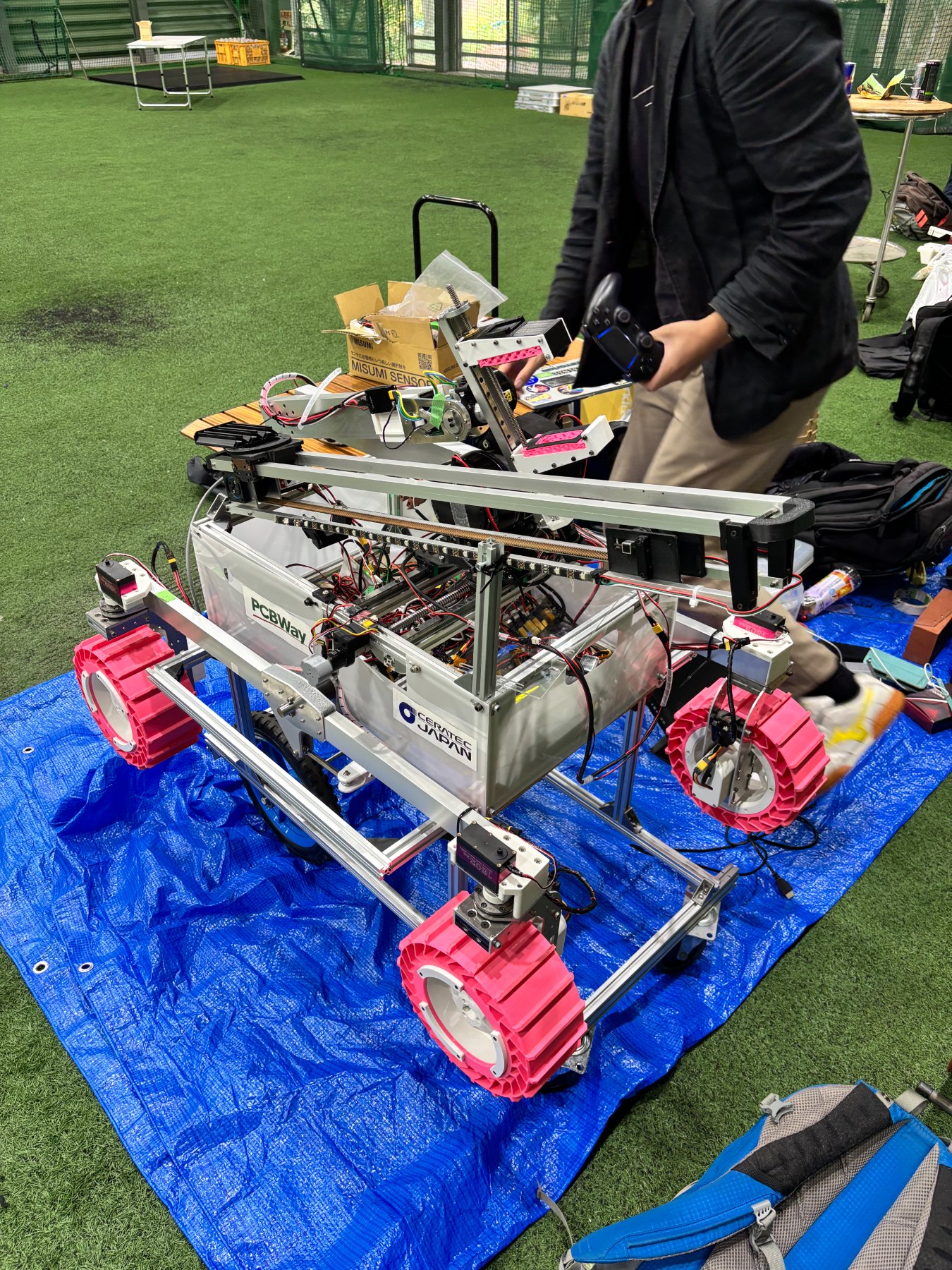
4-wheel drive, 4-wheel independent steering
Wheels and tires
3D-printed PLA wheels + TPU tires
Servo motors
160kgf
Arm
Improved arm with stronger joint torque (parallel motion via a linear mechanism)
Reducer
In-house cycloidal reducer (reduction ratio 1:9)
Gripper
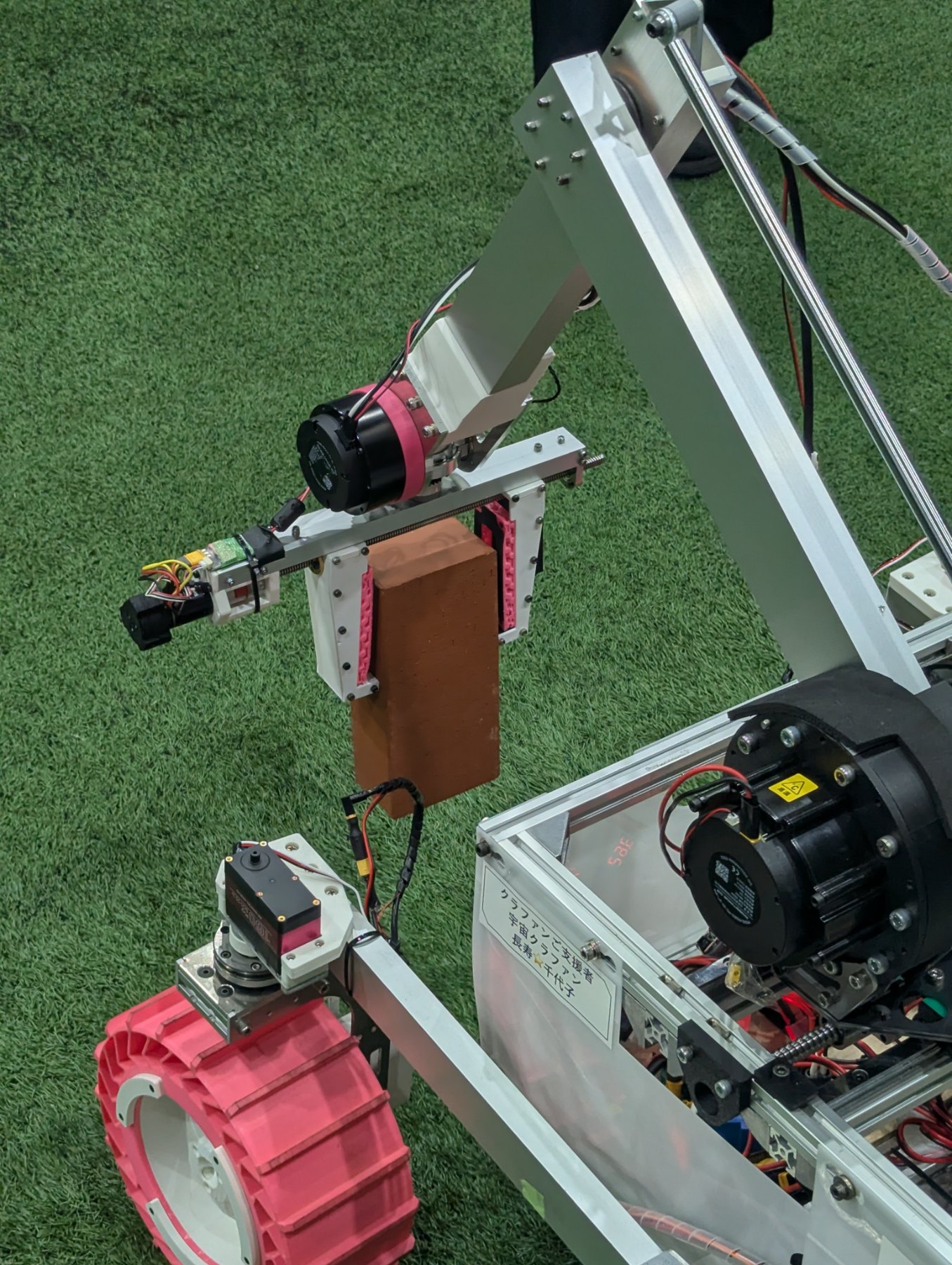
TPU gyroid cushions + anti-slip pads
Weight
approx. 37 kg (as entered in the Space Rover Cup 2026)
Microcontroller
STMicroelectronics
Sensors
Optical cameras, GNSS, resistance temperature detector
Main power
Lithium polymer battery, 22.2 V 6000 mAh
Communication
Wi-Fi
Emergency stop
Physical switches (power cut-off board and emergency stop button)
Competition
Space Rover Cup 2026 (winner)
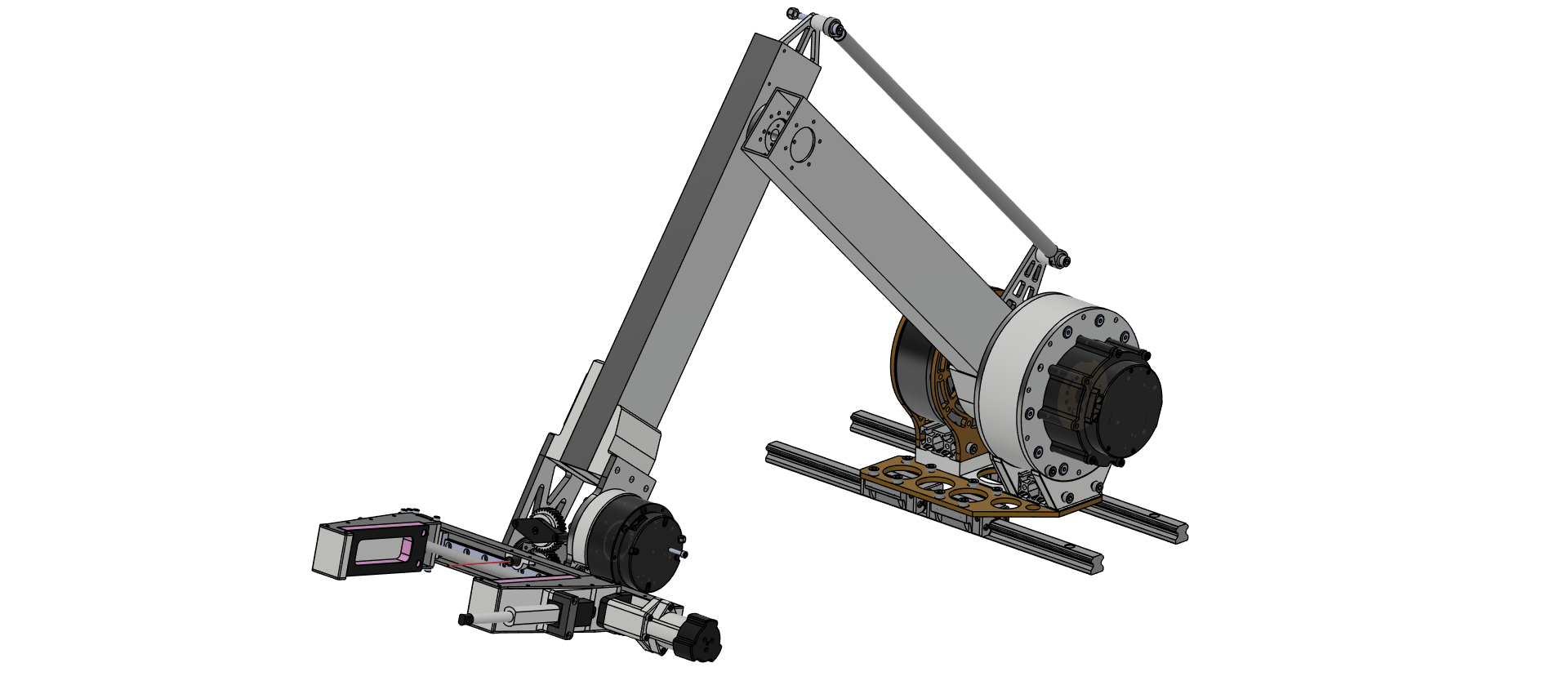
Arm
A stronger, more dexterous arm
This is the improved arm design we presented at Maker Faire Tokyo 2026. We greatly increased the joint torque and revised the joint layout, including adding parallel motion via a linear mechanism.
Stronger joint torque
20 Nm → 40 Nm, 40 Nm → 180 Nm, 4.0 Nm → 16 Nm
In-house cycloidal reducer
Cycloidal reducers with a 1:9 ratio, designed and built by our team
Added pitch axis
A pitch joint added to the arm
Parallel motion via a linear mechanism
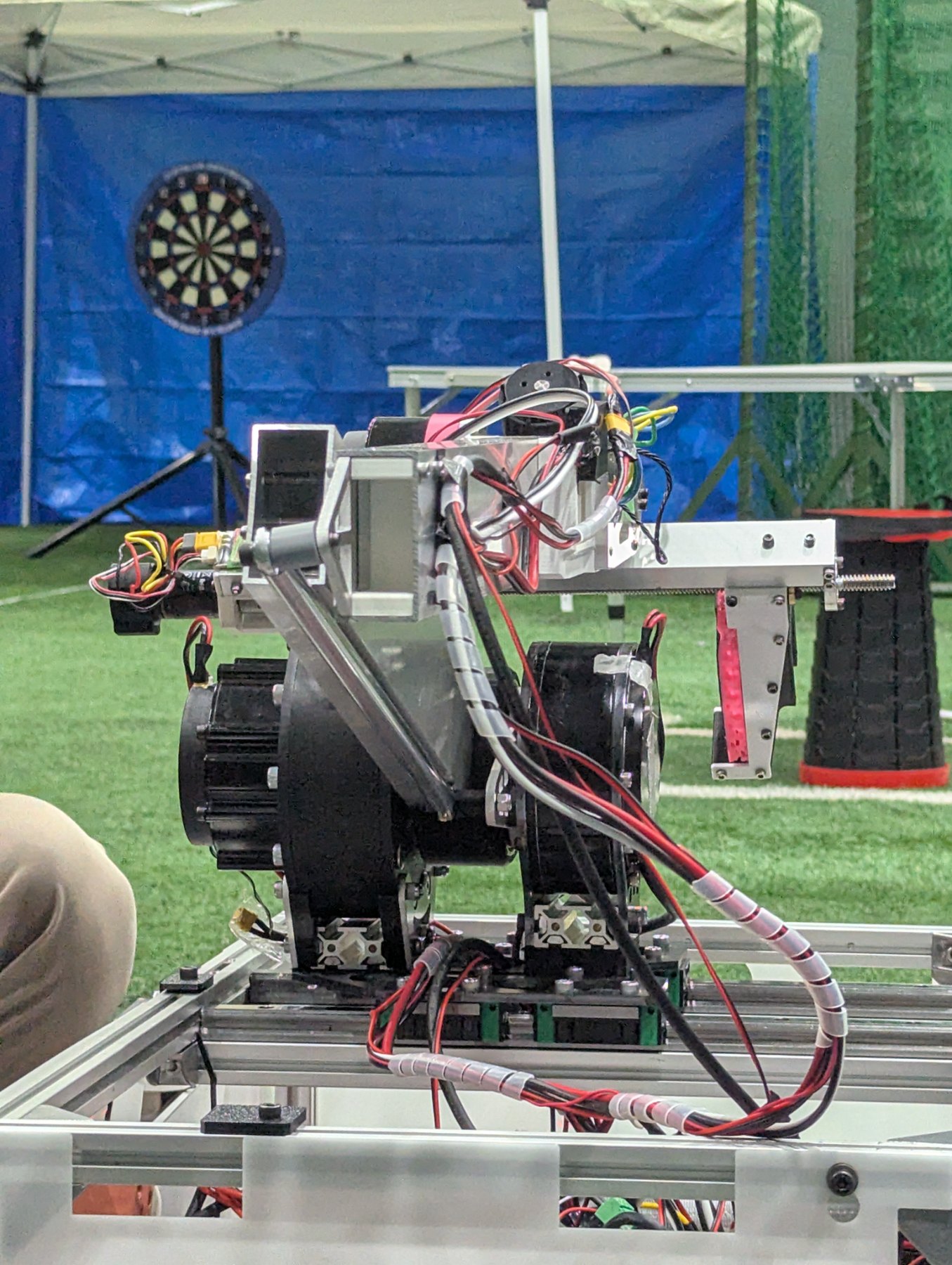
The yaw rotation axis was replaced with a linear mechanism so the arm can move in parallel
New sand sampler
A newly developed mechanism for sample collection
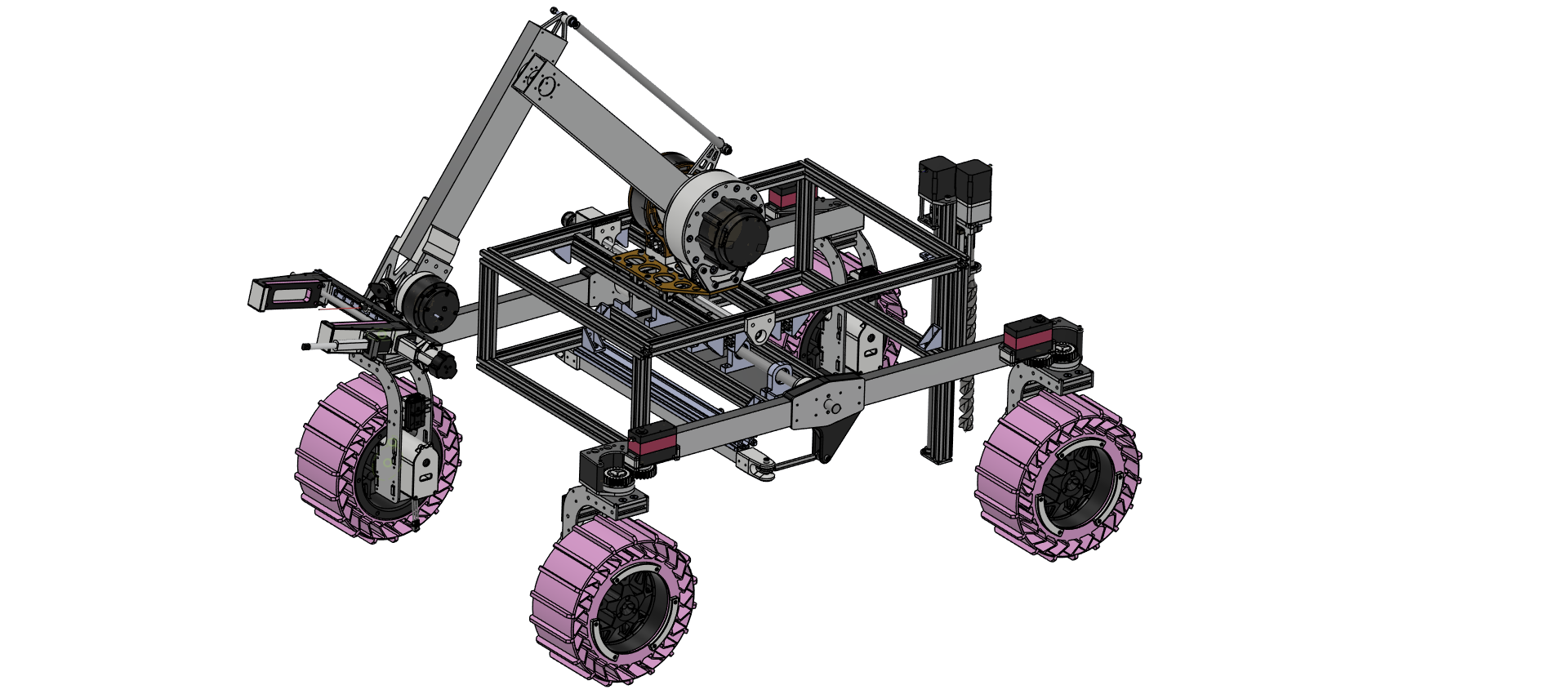
Competition
Competitions
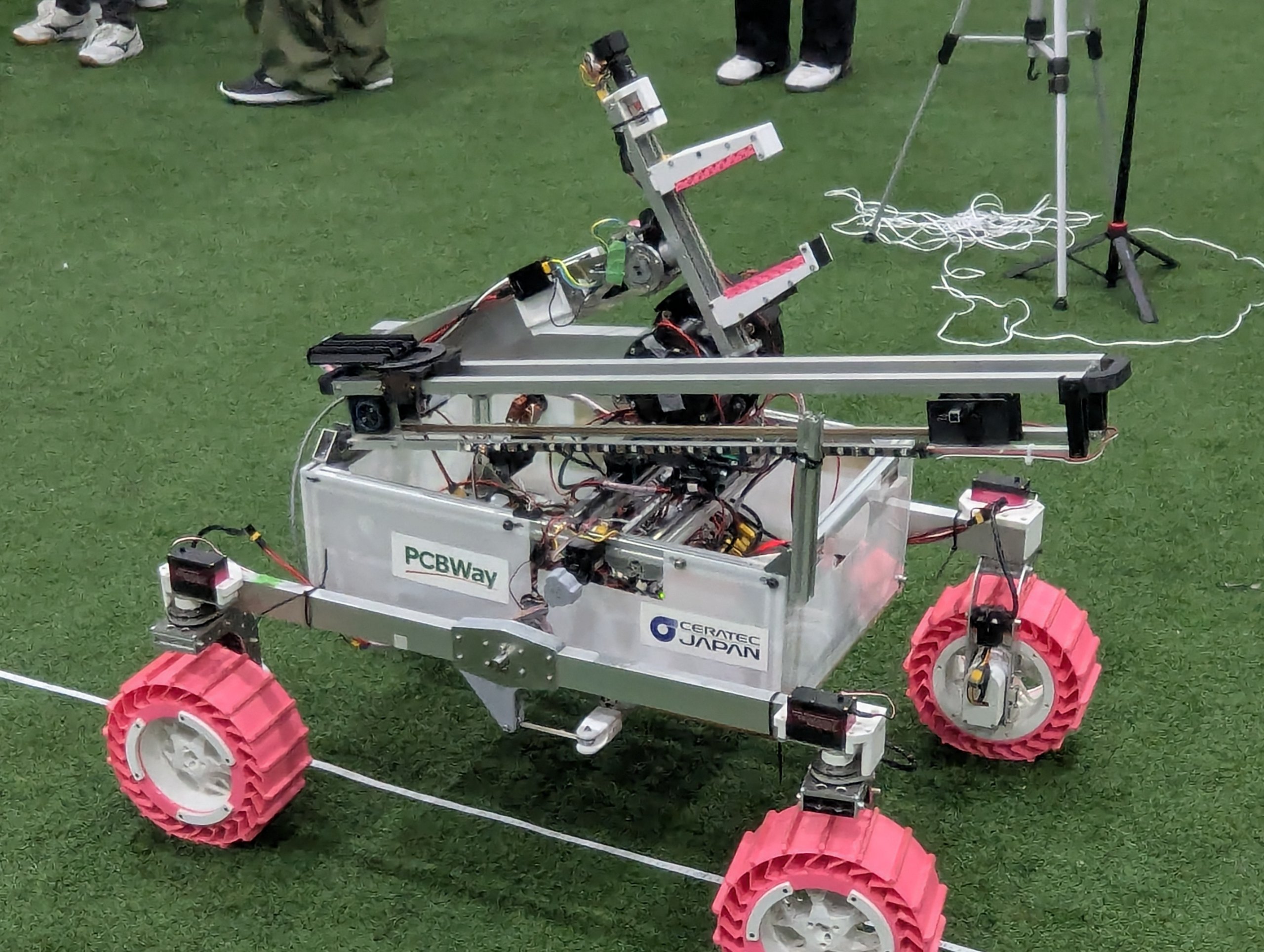
Space Rover Cup 2026
Space Rover Cup 2026 Winner
The record of the competition where we took on three missions (darts, unmanned construction and sample retrieval), with videos of the runs.
Gallery
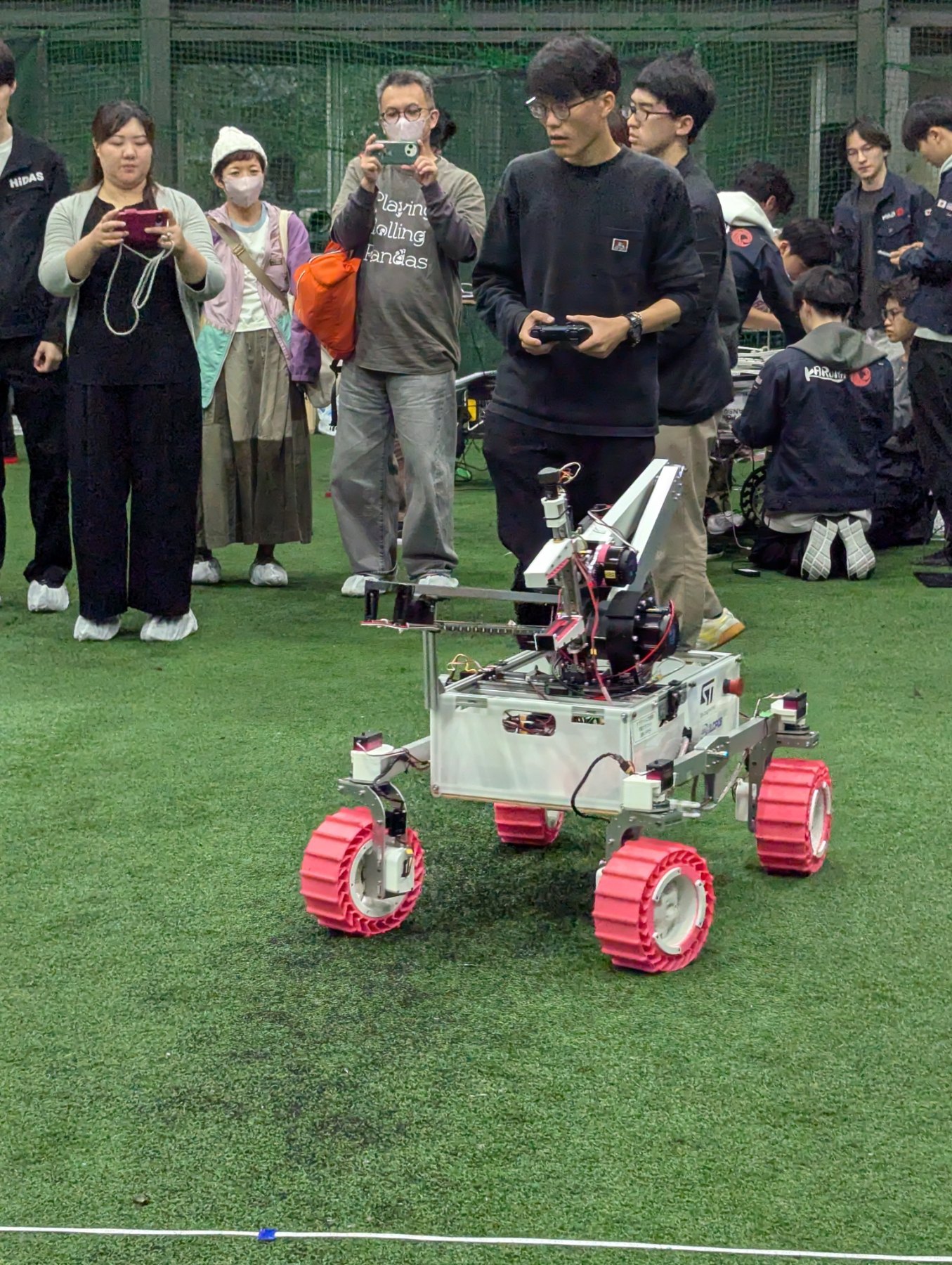
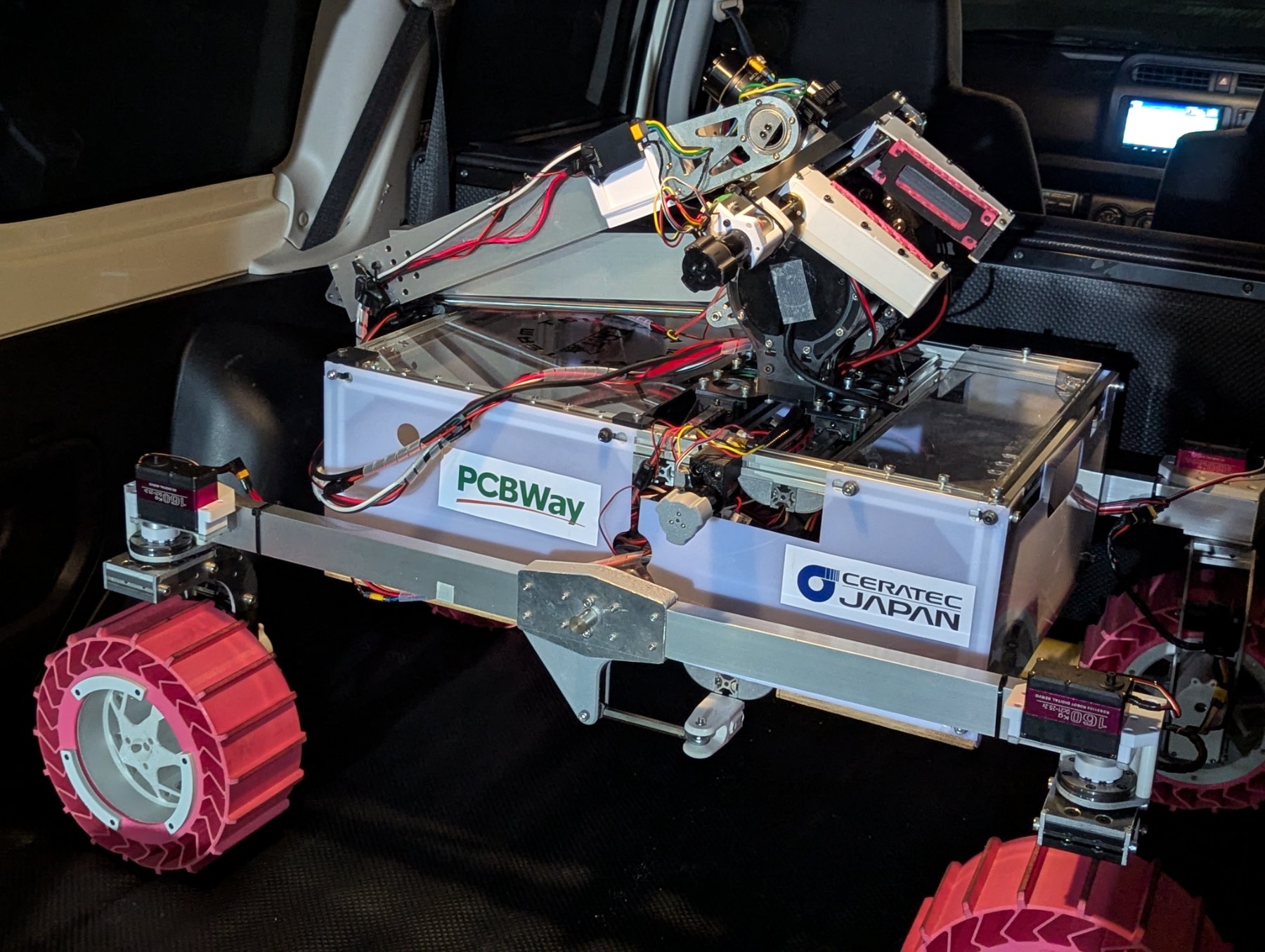
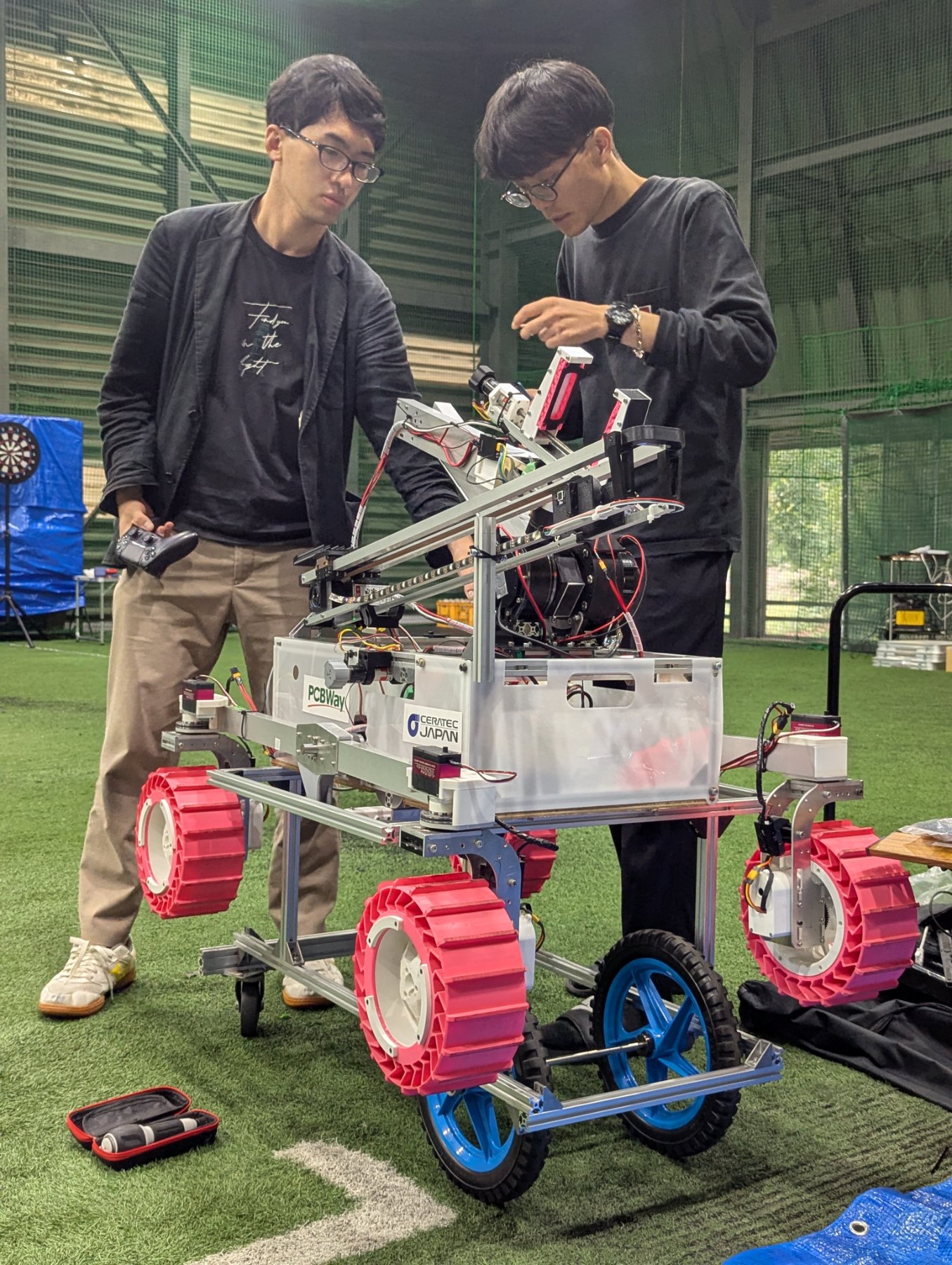
Photos of TR-2
Open source
Software and PCB data
We manage our programs and PCB design data on GitHub.