
Space Rover Cup 2026
Space Rover Cup 2026 Winner
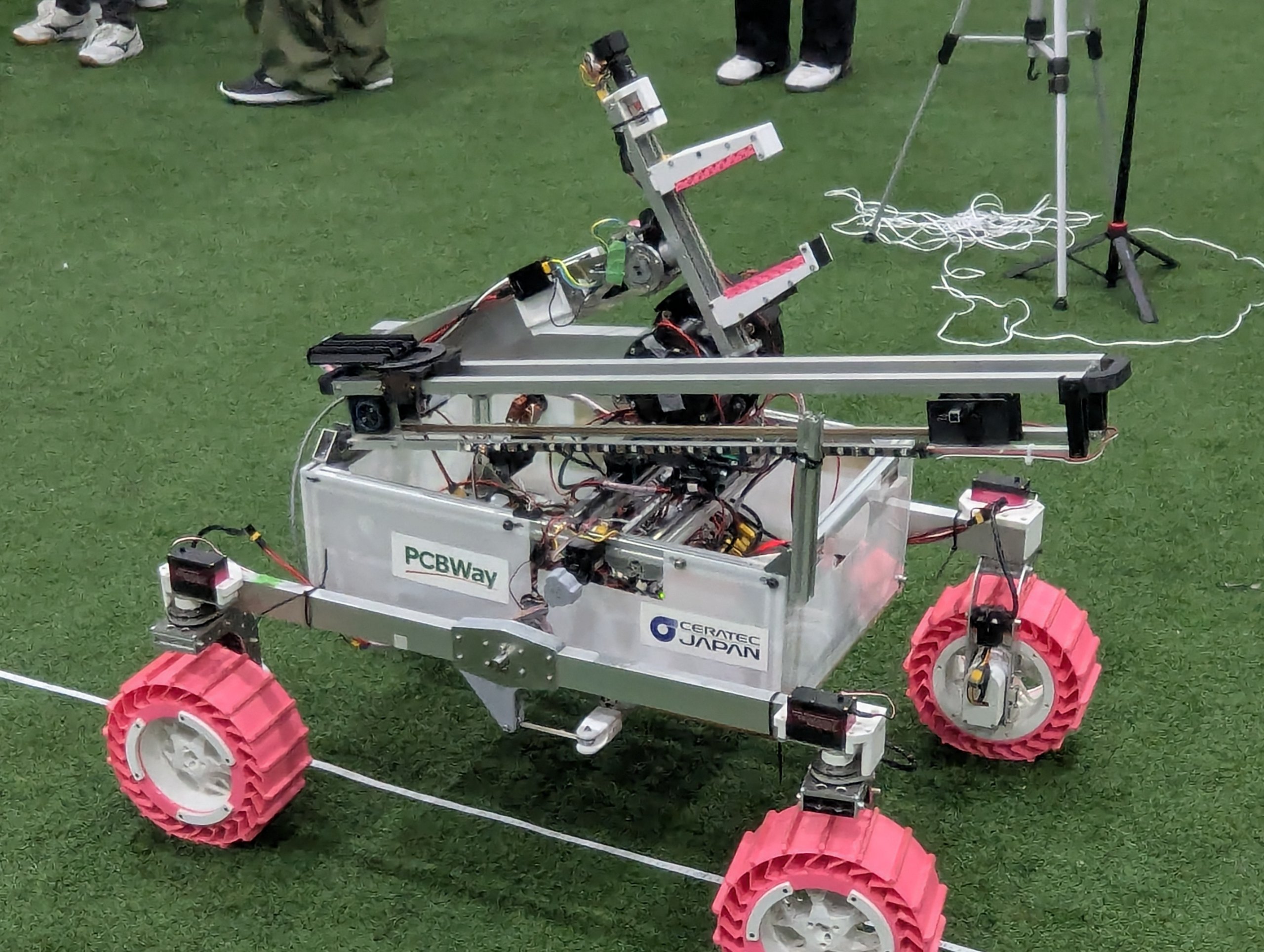
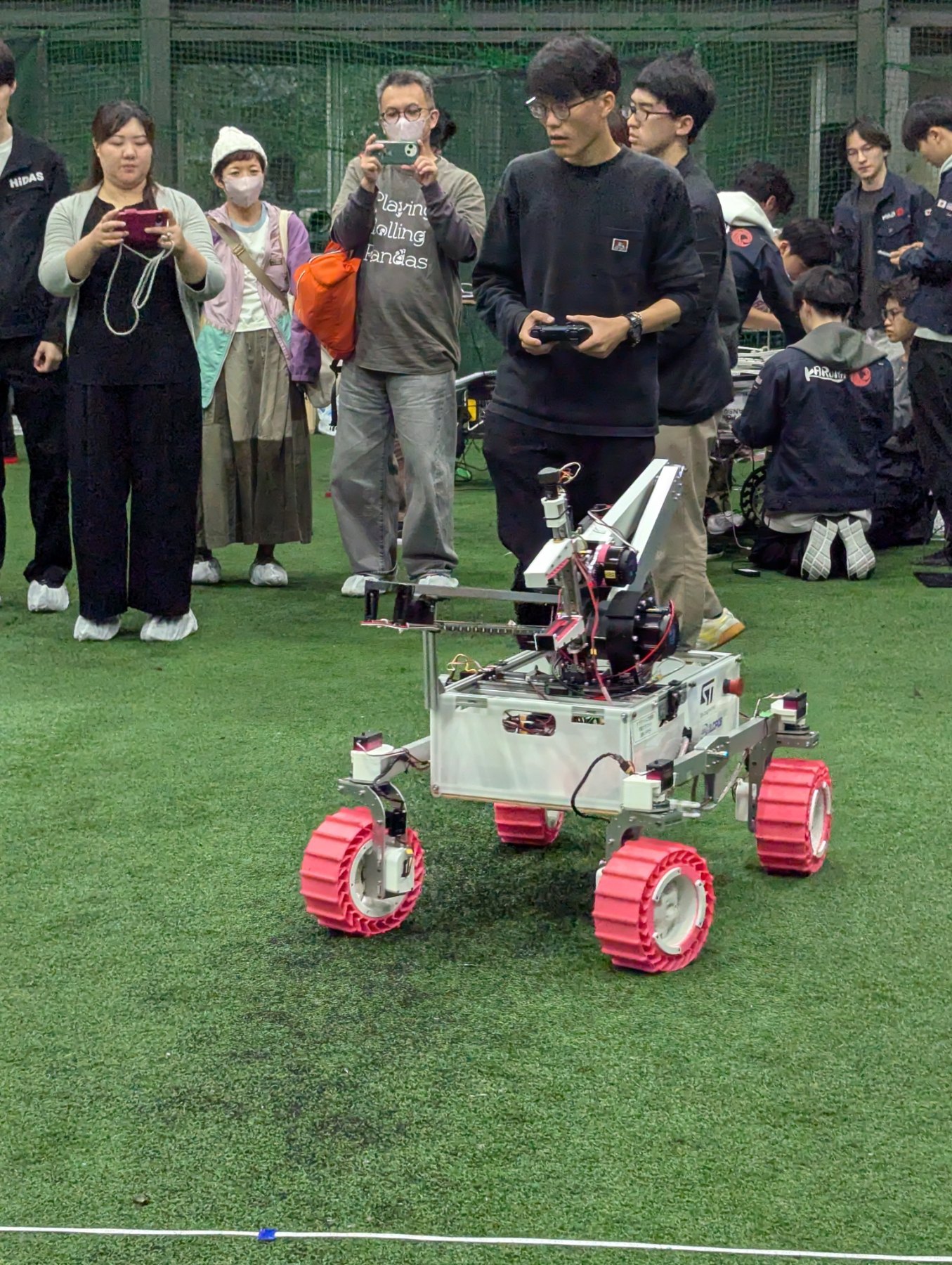
With our second rover TR-2, we took on three missions: darts, unmanned construction and sample retrieval.
About
On a field modeled on an unknown planet,
teams compete in problem-solving.
The Space Rover Cup is a student-led technology competition organized by the Intelligent Robotics Lab at Tokyo University of Information Sciences. CanSat model satellites and large planetary exploration rovers compete by driving on the ground, without drones.
What counts is not speed but how reliably a team completes the given tasks. Teams cross unknown terrain using autonomous control or remote operation, and are judged not only on how well they complete the missions but also on their control ideas, strategy and rover design.
Date
October 24 (Sat), 2026
Venue
Second Ground, Tokyo University of Information Sciences (Wakaba-ku, Chiba)
Organizer
Intelligent Robotics Lab, Tokyo University of Information Sciences
Events
Three missions: darts, unmanned construction and sample retrieval (15 minutes each)
Rover
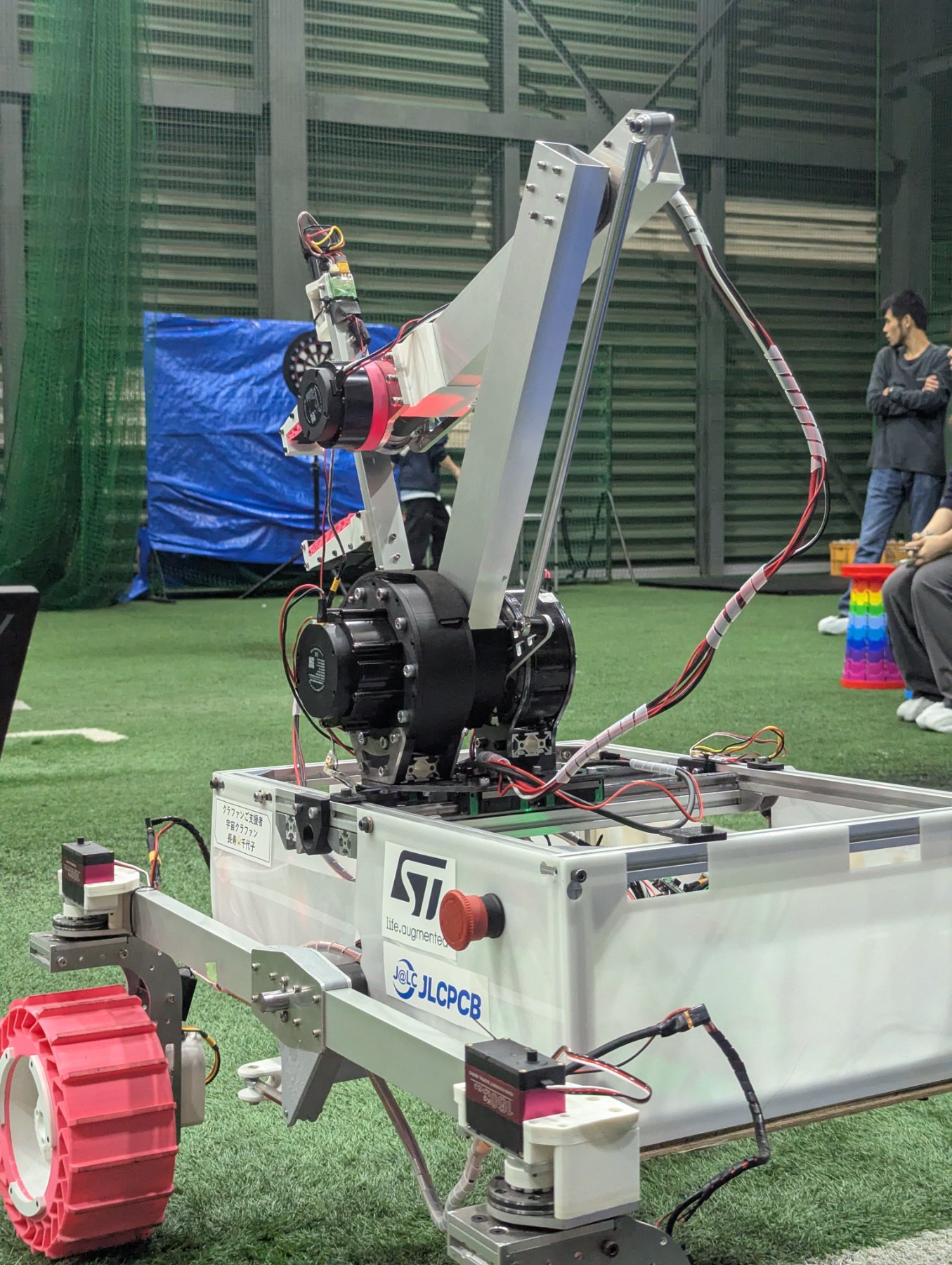
Our second rover, TR-2 (remote operation)
Result
One rover through all three missions,
and the win.
On October 24, 2026, we competed in the Space Rover Cup 2026 at Tokyo University of Information Sciences with our second rover TR-2. Hitting a board with darts, stacking materials to build a wall, gathering and carrying stones: we took on three completely different missions with a single rover, and won.
Following the Tottori Rover Challenge 2026 in March, this was our second title of 2026.
Missions
Three missions
Each mission has a 15-minute time limit and a maximum raw score of 450 points. You can watch TR-2 in action in the videos below (no audio).
01
Darts
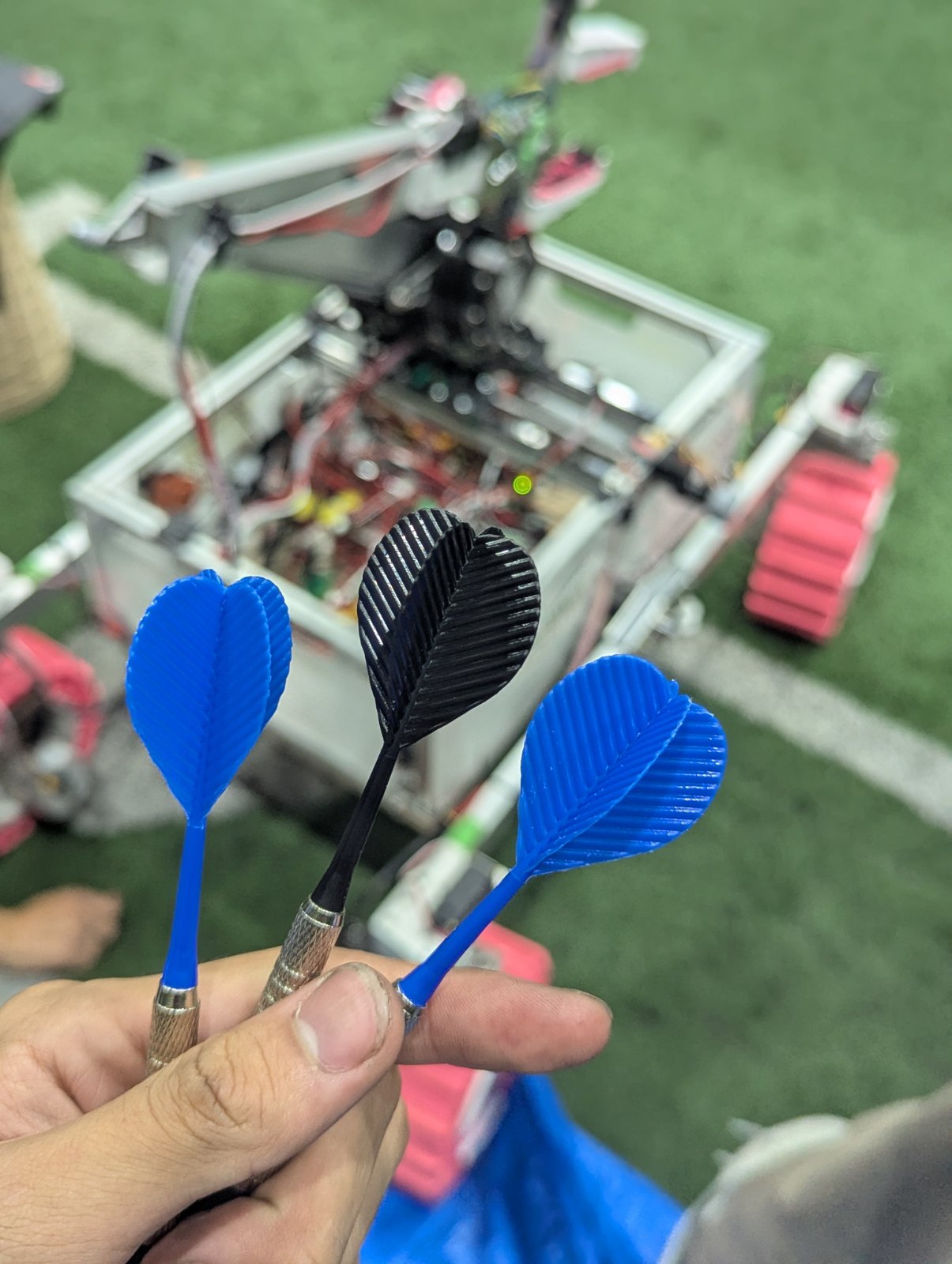
Teams throw up to three darts, and the score of the area hit is multiplied by the throwing distance (0.5–2.5 m). The farther and more accurate the throw, the higher the score.
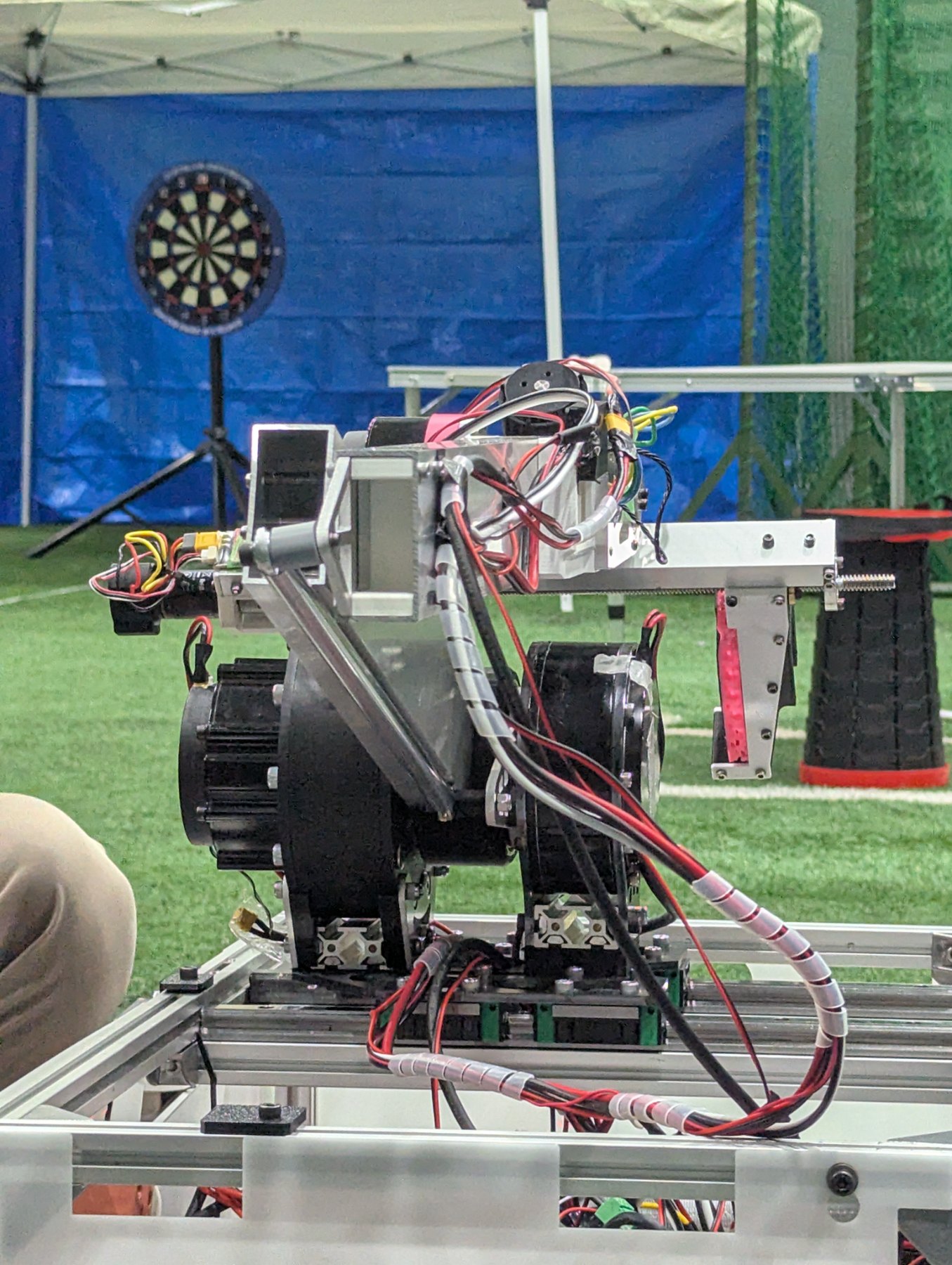
We fitted TR-2 with a launcher and aimed at the board.
02
Unmanned construction
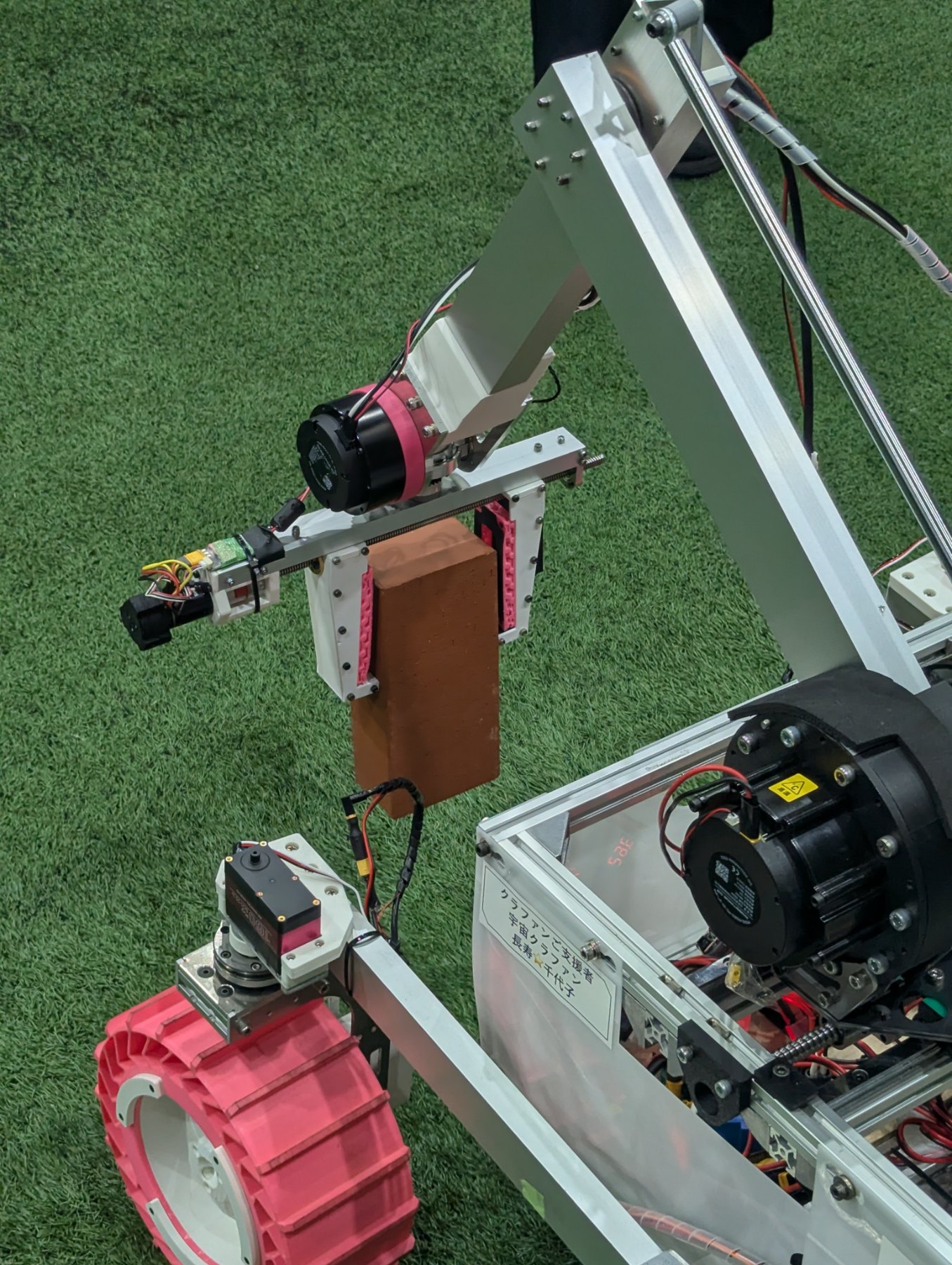
Teams carry and stack wood and bricks to build a wall. Points are given for the number placed and stacked, with bonuses for aligning the faces, stacking three levels high and making it stand on its own.
The arm grabbed the materials one at a time, carried them to the construction area and stacked them.
03
Sample retrieval
Teams carry natural stones and lava stones placed on the field back to the collection area at the start. Scoring is based on the total weight of stones collected, with full marks at 10 kg.
We repeatedly grabbed stones with the arm, carried them to the area and set them down.
Rover
Rover
Rover 02
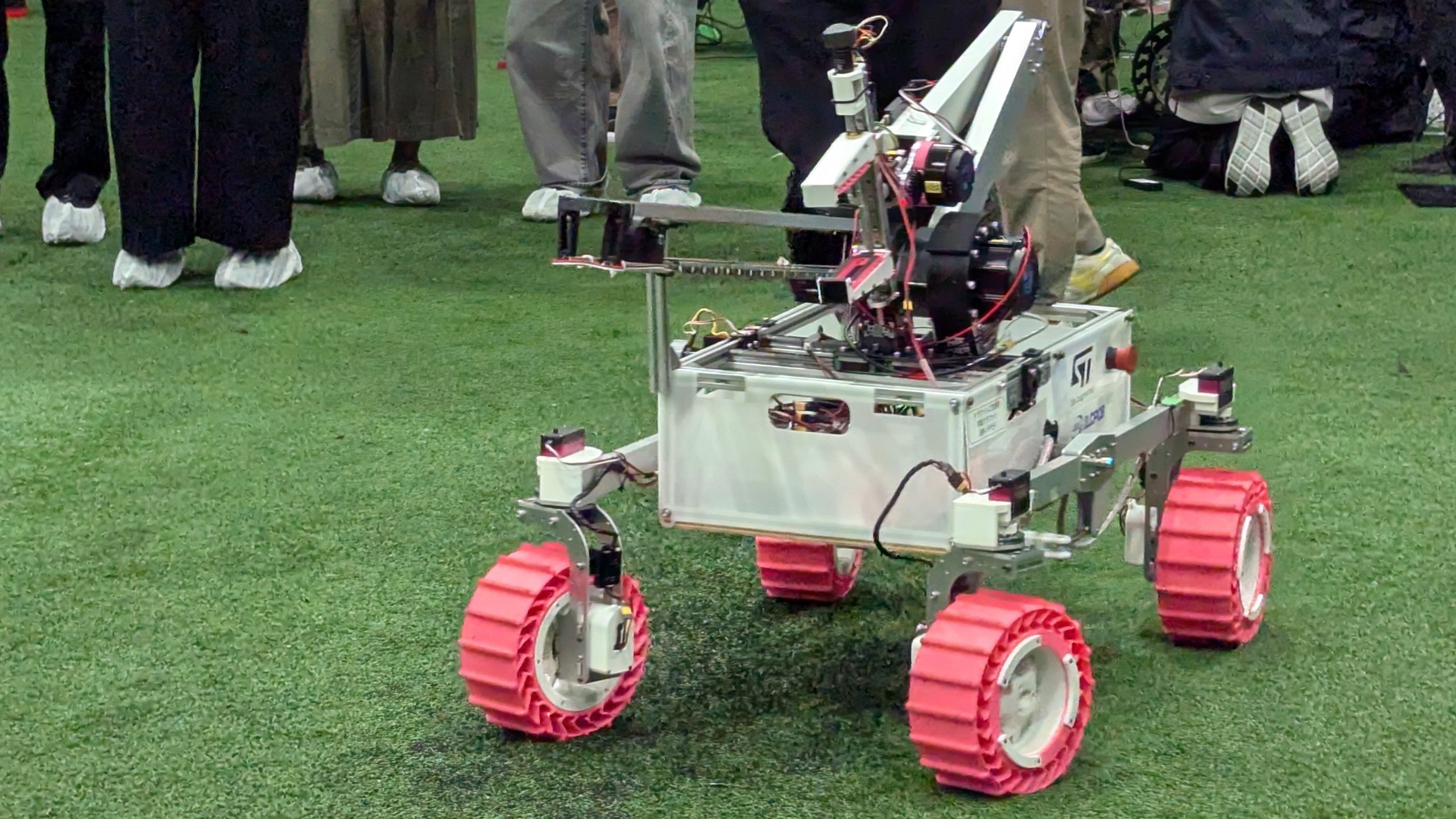
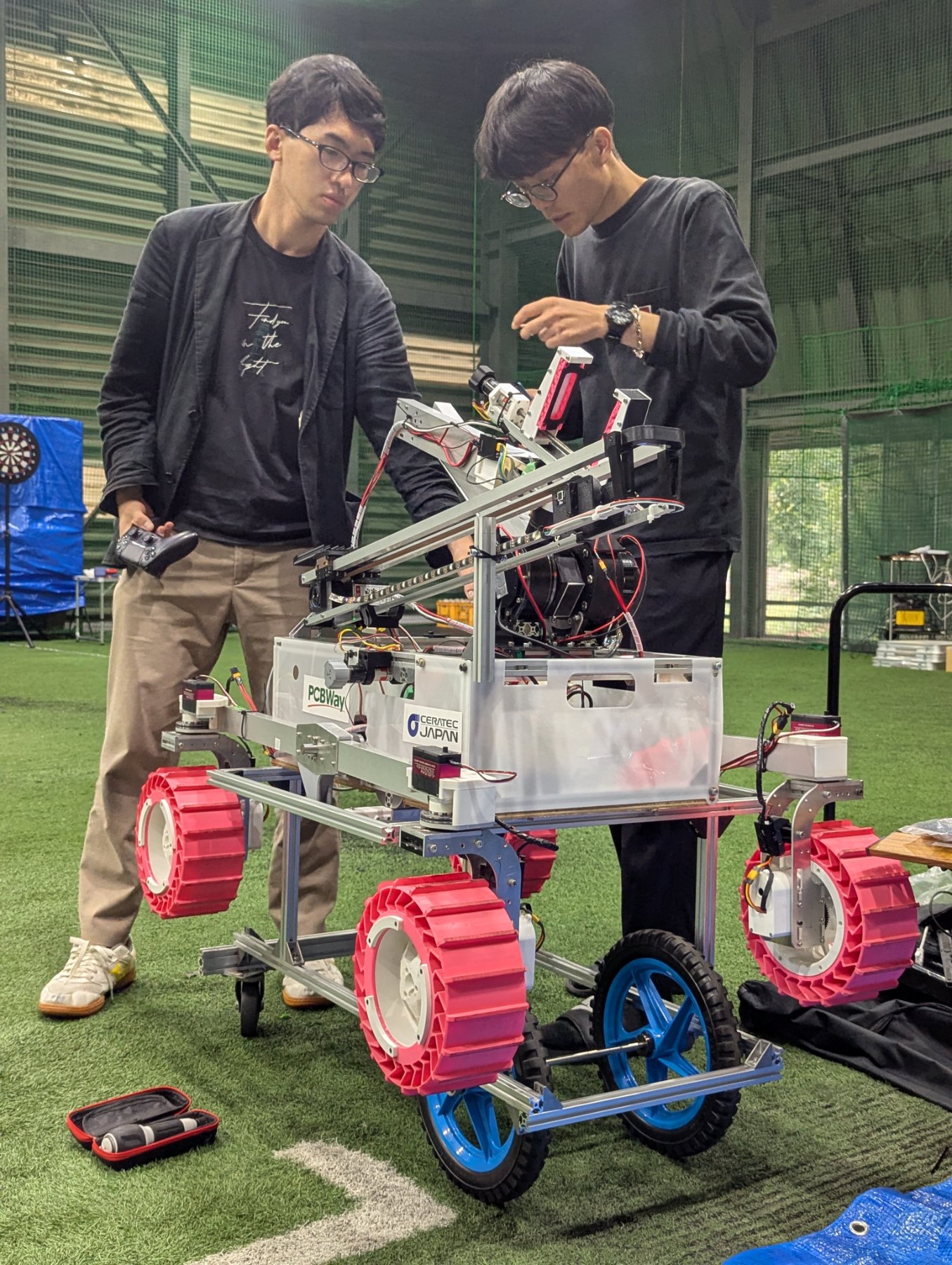
Our second rover, TR-2
Our second rover, in development with URC 2027 in mind. Details of the improved arm and the rover.
Scoring
Scoring that rewards
light, smart rovers.
The total score is the sum of the raw scores of the three missions (up to 1,350 points) multiplied by a weight multiplier and a control multiplier. Besides mission performance, the scoring also rewards light weight and autonomy.
Weight multiplier
1 + log₁₀(70 ÷ rover weight in kg). It is 1.0 at 70 kg and rises as the rover gets lighter.
Control multiplier
1.2 for fully autonomous, 1.0 for remote operation.
Rover limits
Must fit within a 1,200 mm cube, with a total weight of 70 kg or less.
Scoreboard
Scoreboard
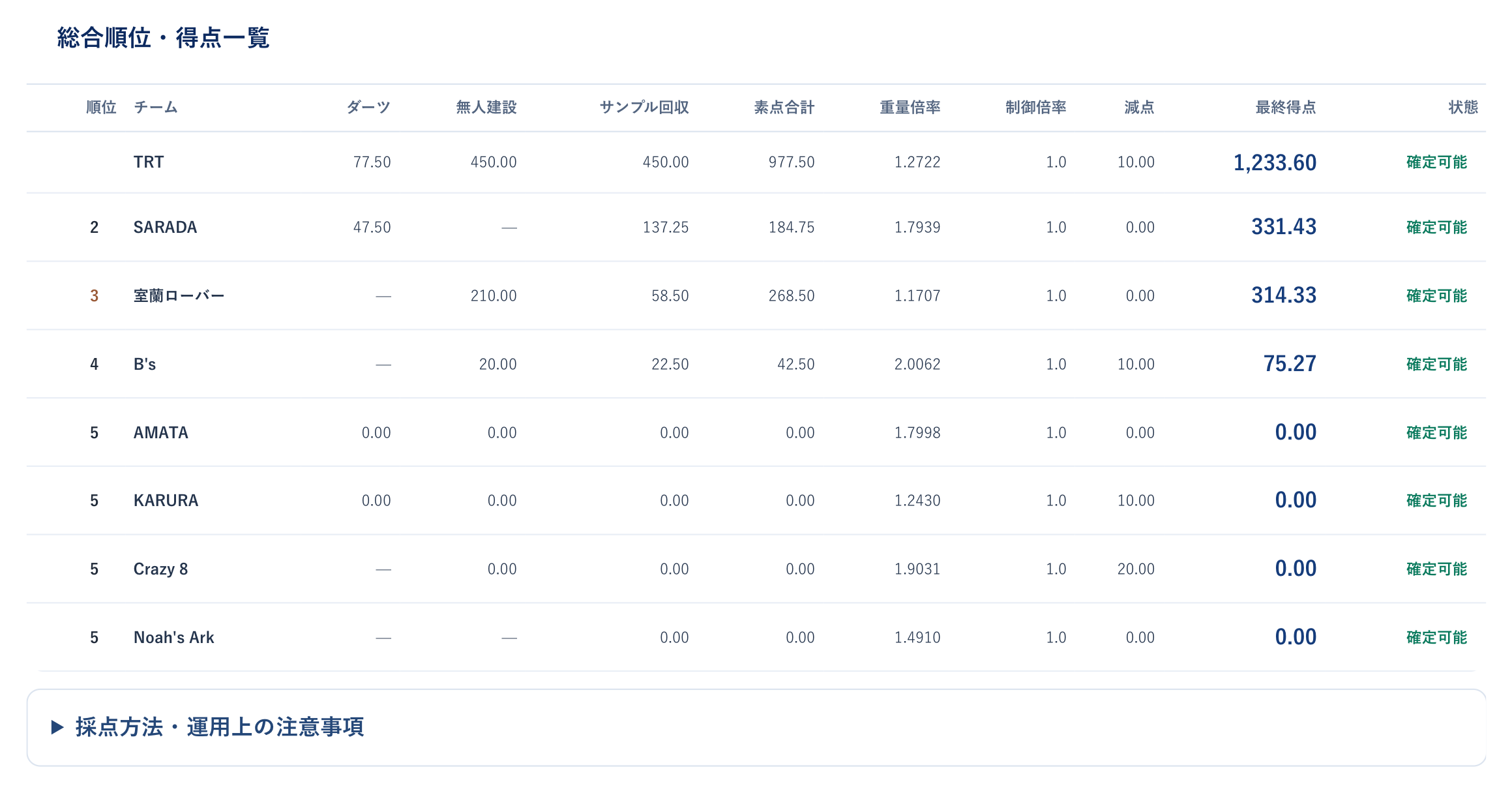
Results of all eight teams from the official overall ranking and score list. We earned full marks (450 points) in both unmanned construction and sample retrieval.
Ranking
Overall ranking
1
TSUKUBA ROVER TEAM
1,233.60
2
SARADA
331.43
3
Muroran Rover
314.33
4
B’s
75.27
5
AMATA
0.00
5
KARURA
0.00
5
Crazy 8
0.00
5
Noah’s Ark
0.00
Breakdown
TSUKUBA ROVER TEAM score breakdown
Darts
77.50
Unmanned construction
450.00
Sample retrieval
450.00
Raw score total
977.50
Weight multiplier
×1.2722
Control multiplier (remote operation)
×1.0
Penalty
−10.00
Final score
1,233.60
Final score = raw score total × weight multiplier × control multiplier − penalty
View the official score sheet (image)
Tap (click) an image to open it at full size in a new tab.
Media
Featured in DARTSLIVE articles
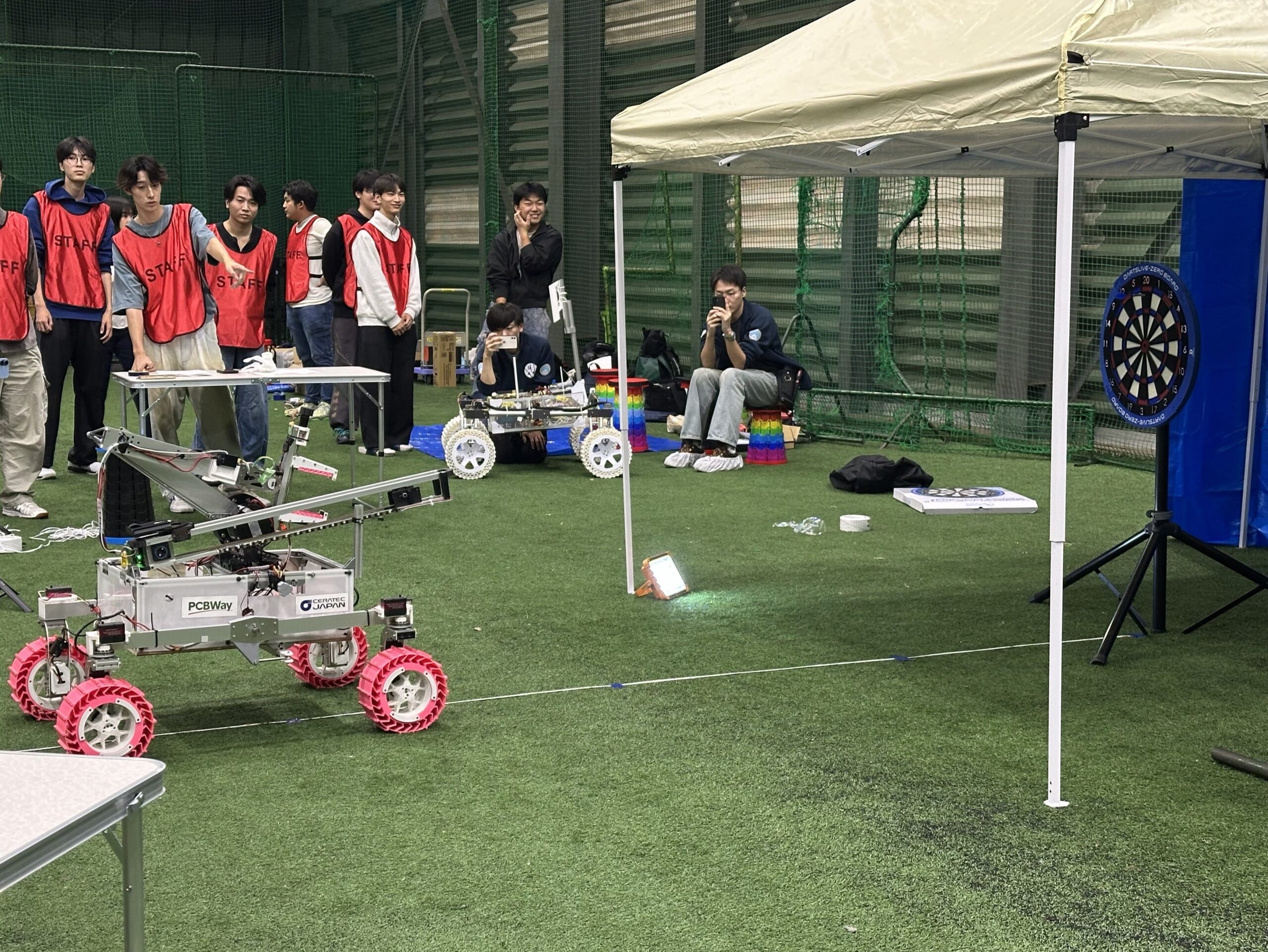
An event report on the Space Rover Cup 2026, sponsored by DARTSLIVE, featured TSUKUBA ROVER TEAM's win. It also highlighted our 77.5 points in the darts mission, thrown from 2.5 m, the highest score among all teams.
DARTSLIVE
Space Rover Cup 2026 event report
DARTSLIVE (PR TIMES)
Read the article →

DARTSLIVE NEWS
Space Rover Cup 2026 held
DARTSLIVE official website news
Read the article →
Live archive
Livestream archive
The organizer, the Intelligent Robotics Lab at Tokyo University of Information Sciences, streamed the competition day on YouTube.
Gallery
At the competition
Next
On to the next stage.
We will continue developing TR-2 for the Expert Division of the Tottori Rover Challenge 2027 and University Rover Challenge 2027.