
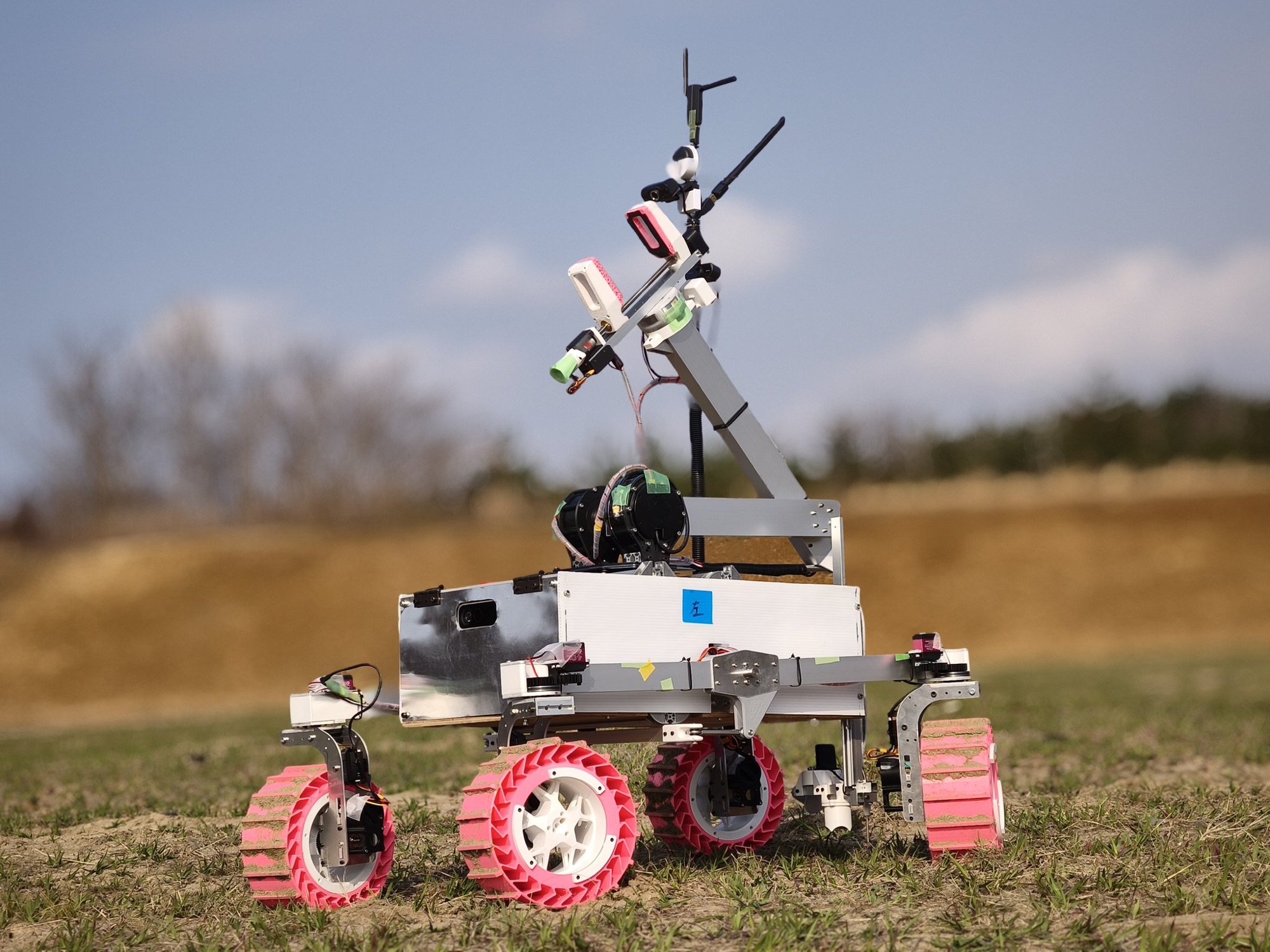
Rover 01
TR-1
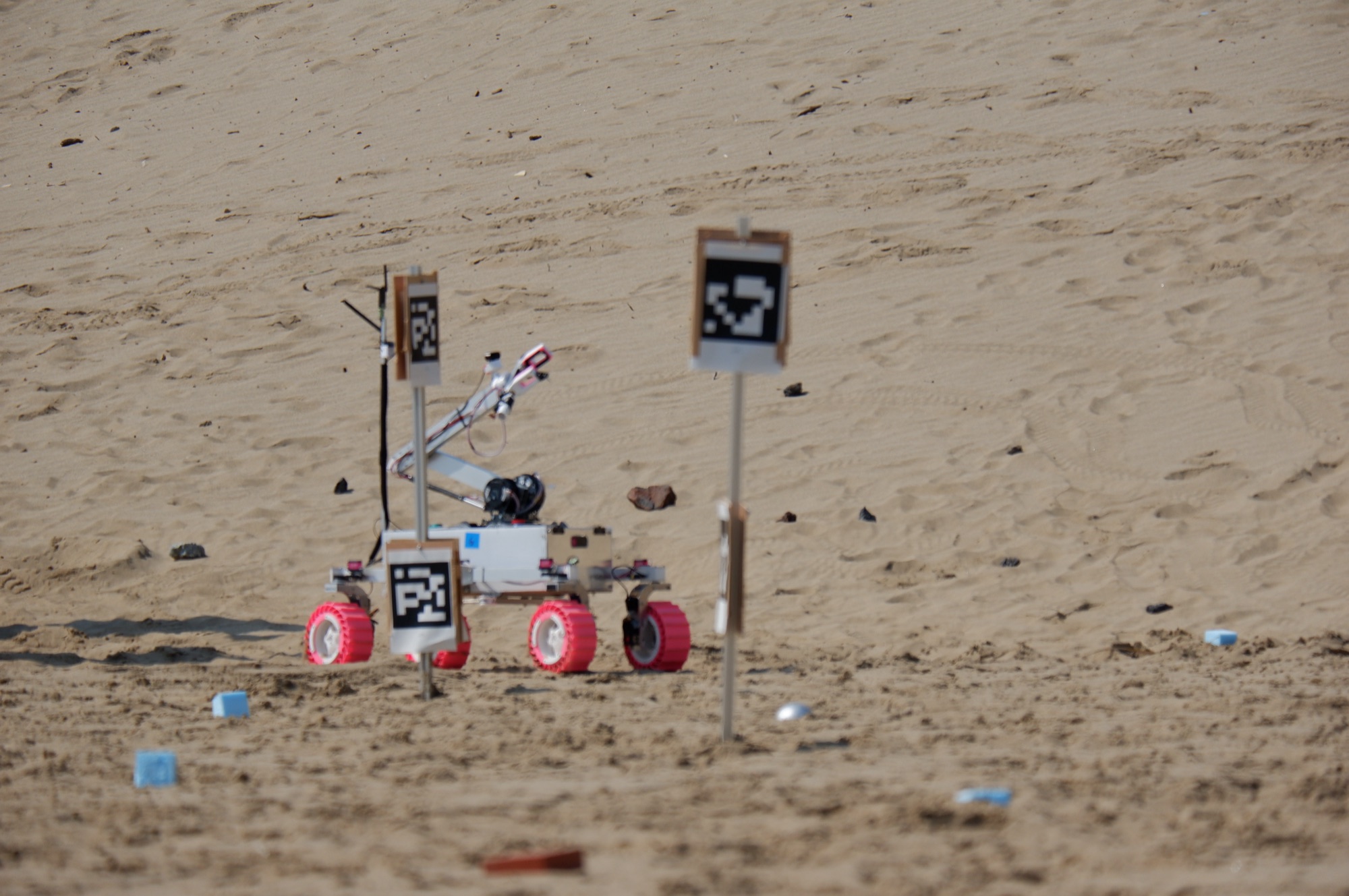
Winner of the Entry Division at the Tottori Rover Challenge 2026. Our team's first rover.
Concept
Scoring reliably
in every mission.
TR-1 is TSUKUBA ROVER TEAM's first rover. The Tottori Rover Challenge 2026 required driving on sand, gripping heavy objects, avoiding obstacles and autonomous navigation all at once, so we designed it not just as a rover that moves, but as a rover that scores points at the competition.
Rather than relying on any single mission, we set the goal of scoring at least 60% in every mission we entered to advance to the final round, and implemented the features most likely to earn points first. We also made the rover modular so that parts are easy to repair and replace on site, which paid off when fixing damage from shipping and clearing out sand.
Specifications
Key specifications
35.35
kg
Weight
4WD
4-wheel independent steering
Agile turning on sand
5
axis arm
4 DOF + gripper open/close
5
kg
Grips and carries a steel ball
Size (stowed)
684 mm (W) × 1010 mm (D) × 900 mm (H)
Weight
35.35kg
Drive
4-wheel drive, 4-wheel independent steering
Wheels and tires
3D-printed PLA wheels + TPU tires
Arm
5-axis (4 DOF + gripper open/close)
Gripper
TPU gyroid cushions + anti-slip pads
Main power
Lithium polymer battery, 22.2 V 6000 mAh
Communication
5 GHz (W56) Wi-Fi
Sensors
Optical cameras, GNSS, resistance temperature detector
Control
ROS 2 / micro-ROS (Teensy 4.1)
Specifications as entered in the Tottori Rover Challenge 2026
Technology
Technical highlights
01
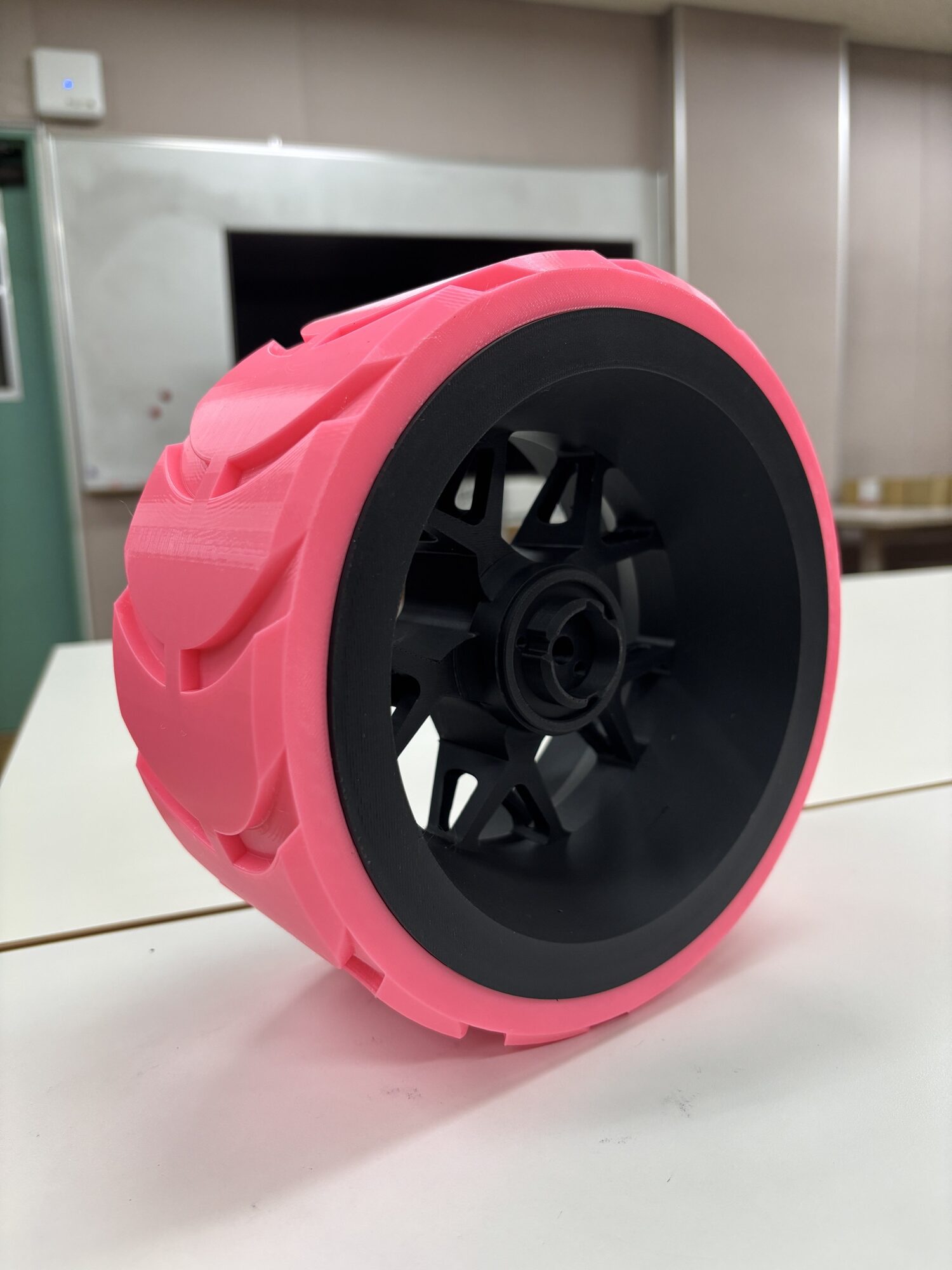
Independent steering and TPU tires for driving on sand
On soft sand, rovers that turn by varying the speed of the left and right wheels tend to dig in and get stuck when turning. TR-1 uses independent steering, with a separate servo motor turning each of its four wheels. Its 3D-printed TPU tires have lugs and deform to fit the ground, increasing the contact area and reducing slip.
02
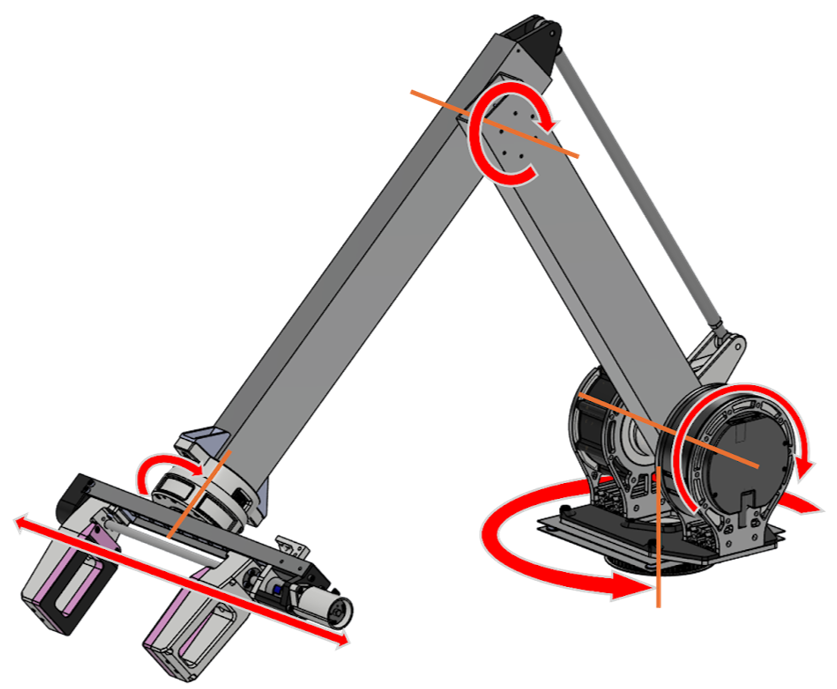
A 5-axis arm that lifts a 5 kg steel ball
We placed the heavy motors at the base of the arm and drive the tip through linkages, reducing the load from the arm's own weight. The frame uses standard aluminum square tubing, machined accurately with just a drill press with the help of 3D-printed jigs. The gripper uses TPU gyroid cushions and anti-slip pads to hold the steel ball firmly without damaging it.
03
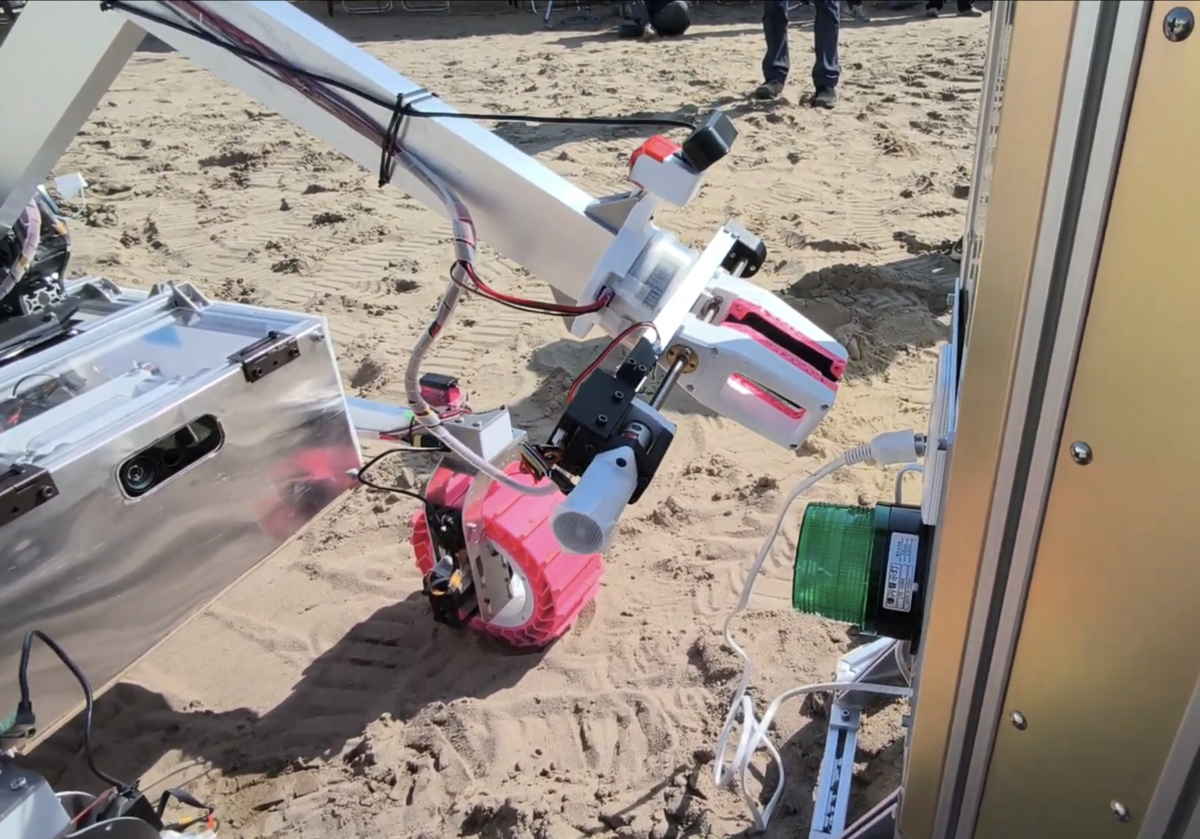
Interference-free communication and scientific exploration
While many teams used the 2.4 GHz band, we deliberately chose 5 GHz (W56) Wi-Fi to avoid radio interference at the venue, sending video and control commands reliably. The rover carries optical cameras, GNSS and a resistance temperature detector for exploration missions such as photographing rocks, measuring sand temperature and operating the lander.
04
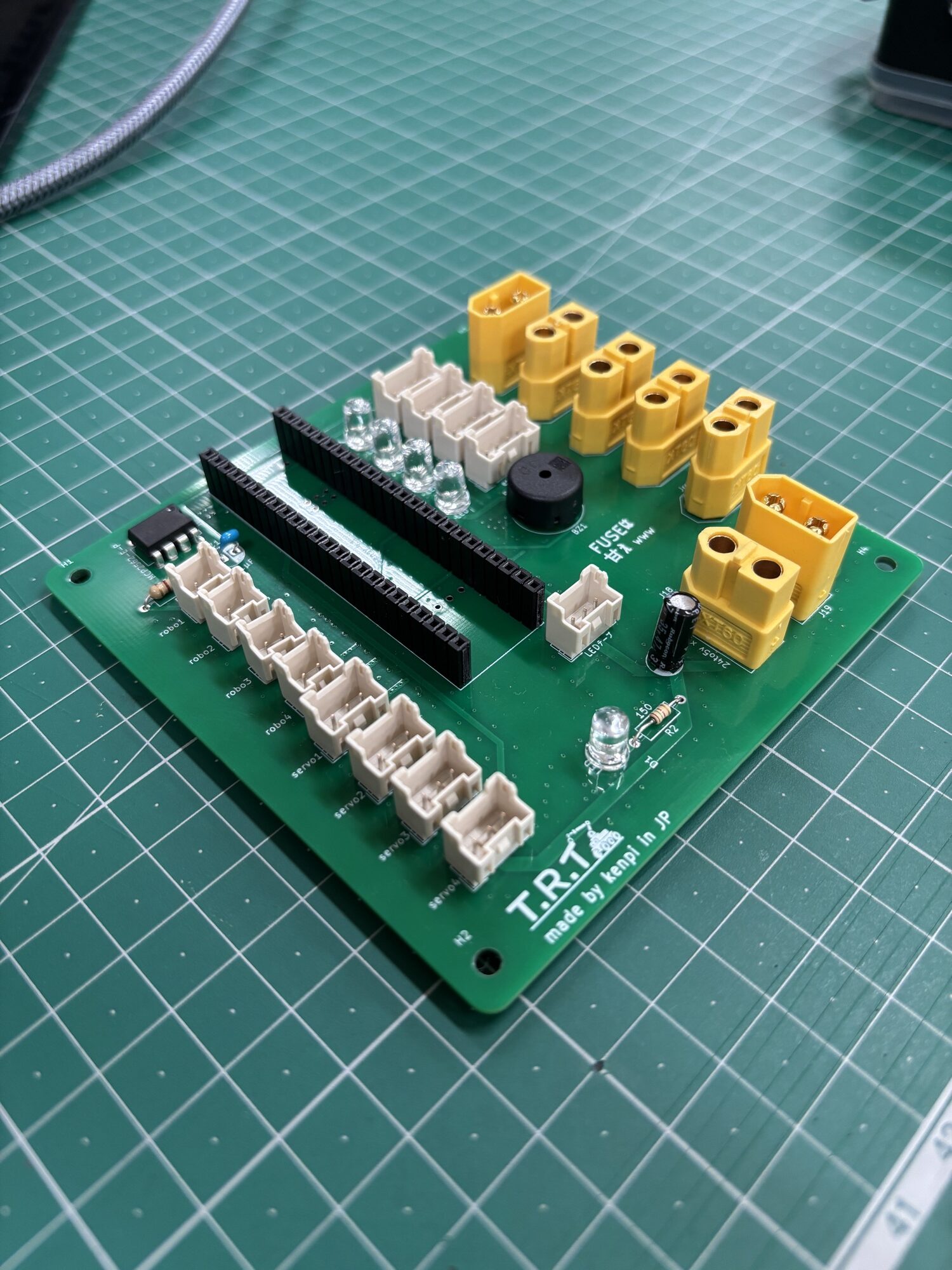
Original circuit boards
Our members design the power and motor boards, and PCBWay supports their manufacture. Power from a 22.2 V lithium polymer battery is distributed to multiple 24 V, 12 V and 5 V lines.
Development
Development process
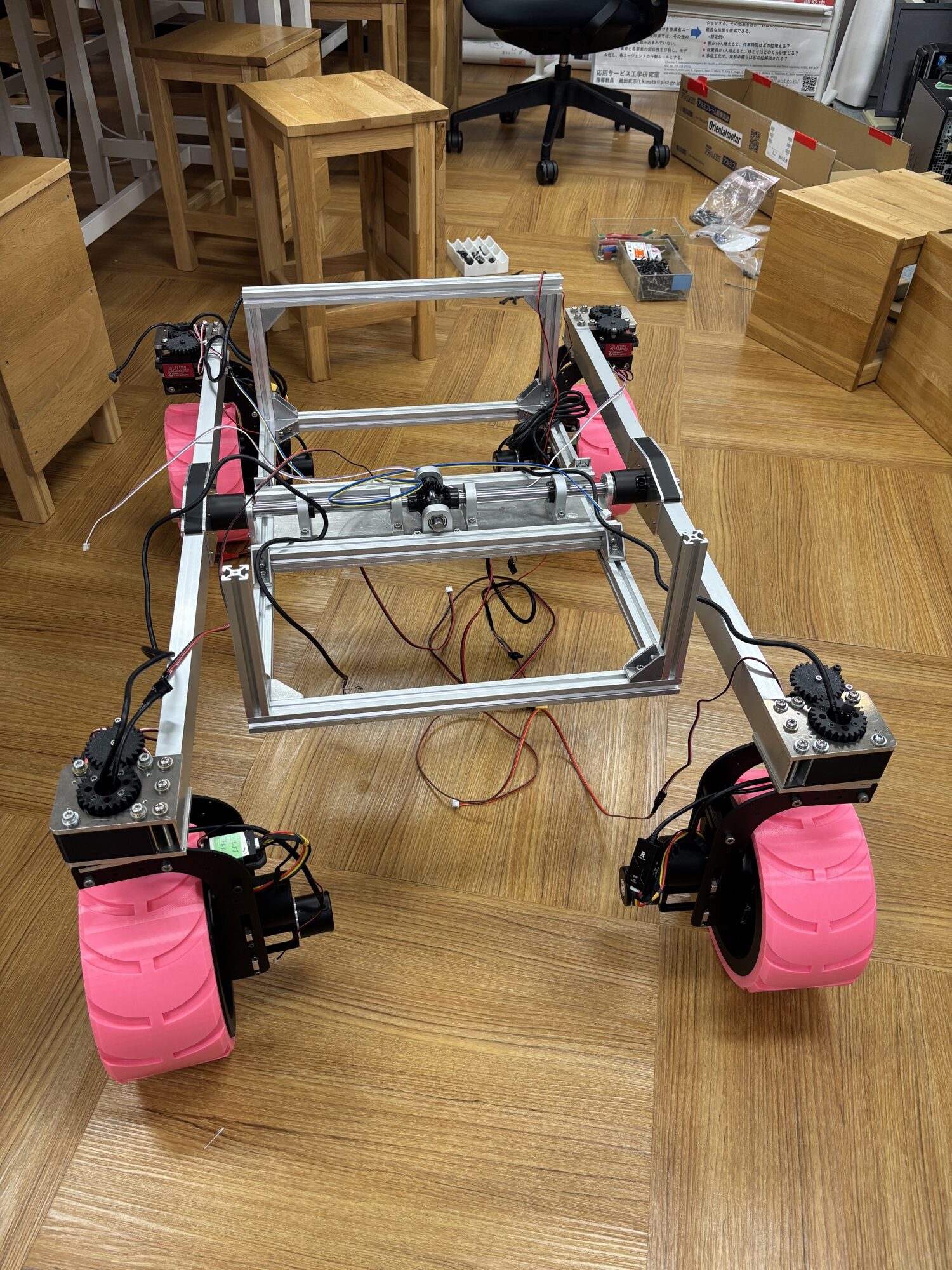
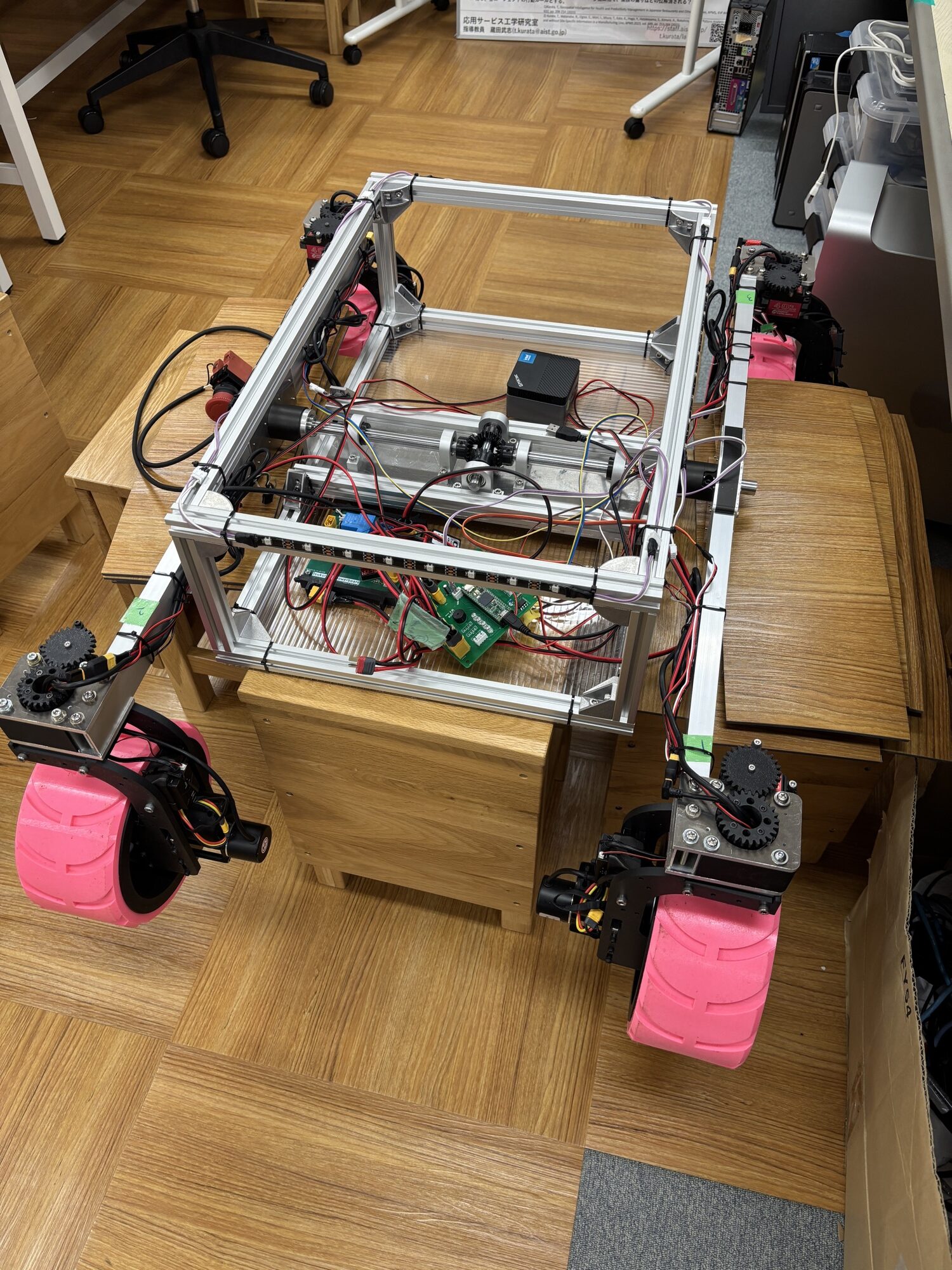
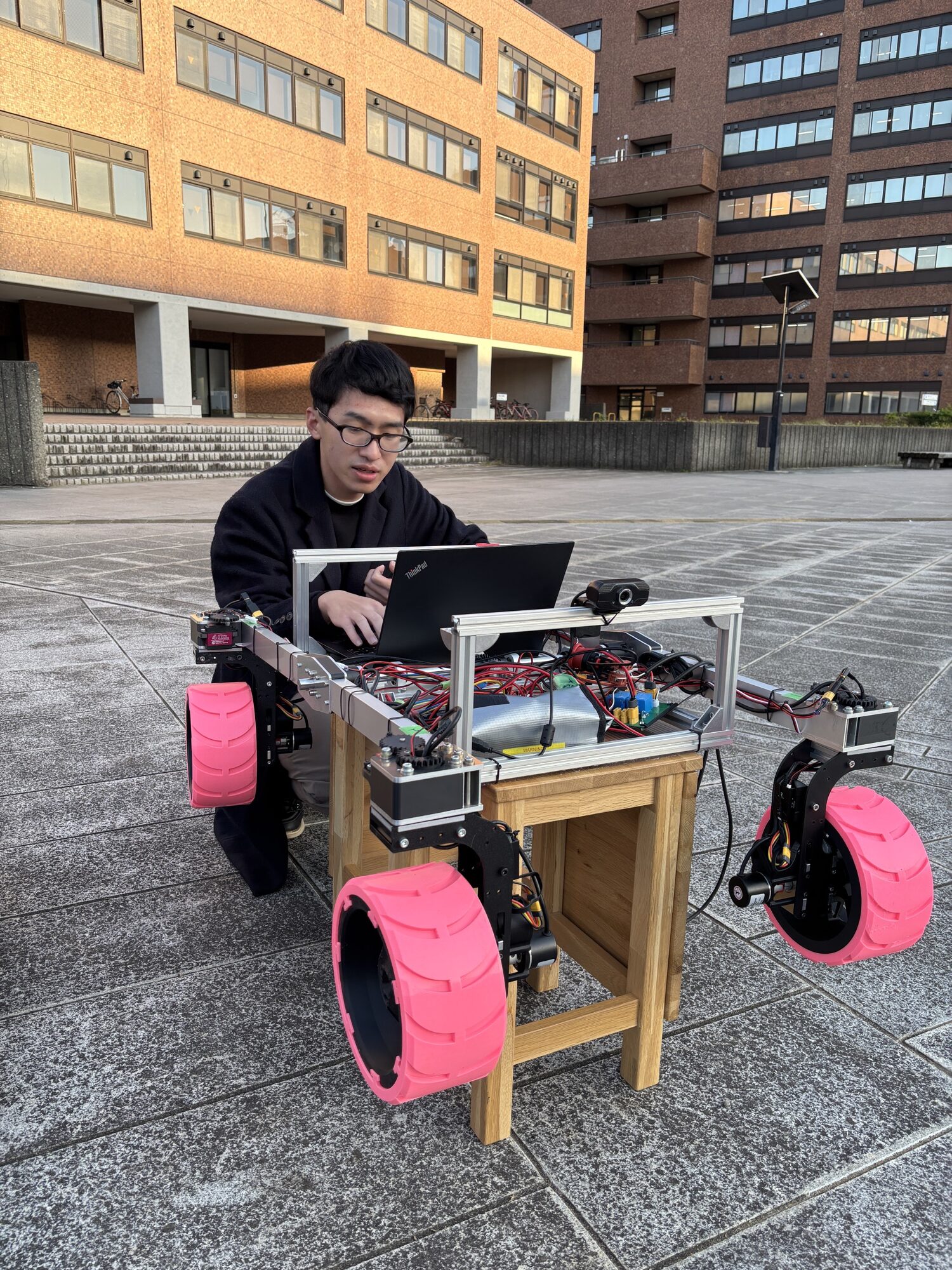
We started building in September 2025, carrying out design, fabrication, assembly and testing in parallel over about six months.
Next
Toward the next rover
The competition also revealed challenges: sand getting inside, poor video visibility in strong sunlight, sideways slipping on slopes and communication dropouts. We are making improvements for the Expert Division of the Tottori Rover Challenge 2027 and University Rover Challenge 2027. Our second rover TR-2, developed with these lessons in mind, won the Space Rover Cup 2026 in October 2026.
01
Dust protection
We are designing in protection against sand from the start, including sealing materials, dust filters and sealed motor boxes.
02
Autonomous driving
We are working on localization that combines GNSS/IMU with stereo cameras, and on detecting and avoiding slip.
03
Cameras and operator display
We plan to switch to cameras that stay clear in strong light and to show the rover's tilt on the operator display.
04
More stable communication
We are reviewing antenna placement and connection checks so that we can switch to the backup link right away.
Open source
Software and PCB data
We manage TR-1's programs and PCB design data on GitHub.